





















































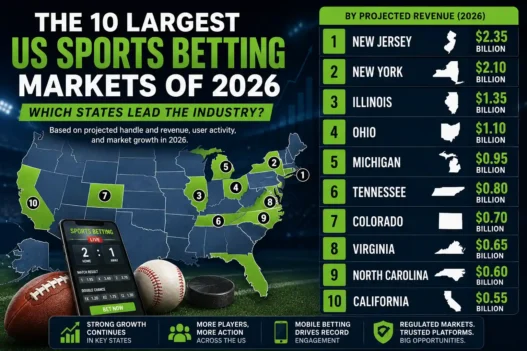
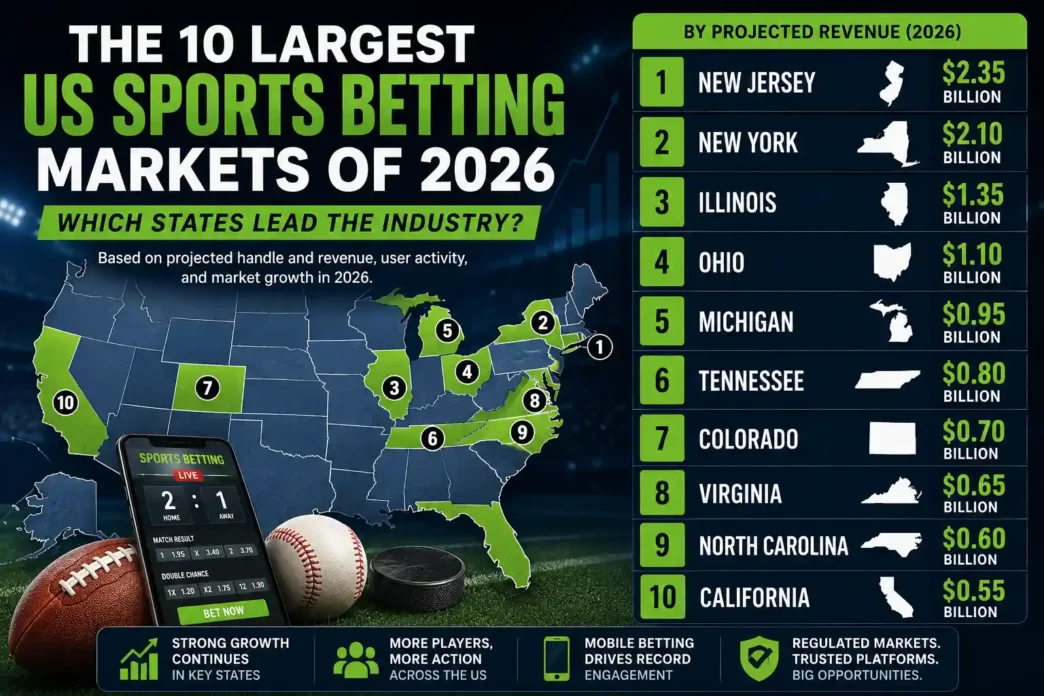
The American sports betting scene is a very different animal than it was just a few years ago. Legal wagering has spread to many states and become one of the fastest growing industries in the gaming industry. Sports betting has become a mainstream entertainment activity thanks to mobile betting, greater consumer acceptance and more competition among operators.
Some states have clearly become leaders as the market has developed. These jurisdictions have the biggest betting handles, the biggest sportsbook operators and contribute a lot to the industry’s overall revenue. Their performance is a good indication of where the USA sports betting industry is heading and which regions are going to shape its future.
The market rankings have changed over the years but there are some states that have consistently proven themselves as the biggest and most powerful betting markets in the country.
Certain states dominate the sports betting landscape:
Not every state has the same benefits coming into the betting industry.” Population size matters, but it’s not the only thing. The performance of the market is affected by regulatory frameworks, availability of mobile betting, tax structures, operator competition and consumer adoption rates.
States that have easy mobile betting usually see a lot more betting action than those that rely heavily on retail sportsbooks. We also see increased customer activity in competitive markets with multiple operators.
These factors have helped create several leading US sports betting markets that still outpace much of the country.
1. New York, the gambling capital of the country
New York is still one of America’s largest sports-betting markets. The state is a major player with a huge wagering activity, a sports culture and mobile betting participation that are widespread, and a large population.
“Since New York got into the online sports betting game, it’s been one of the leading states in terms of handle and revenue. Its size alone makes it an important battleground for sportsbook operators looking to grow and gain market-share. It continues to be a leader in the overall US sports betting market.
2. New Jersey: The new trailblazer of sports betting
New Jersey was at the forefront of the historic expansion of legal sports betting and remains one of the sport’s top markets. The state has a well-developed regulatory framework and a very competitive operator landscape. Continued growth is fueled by proximity to major metropolitan areas and its existing gaming infrastructure. And New Jersey still ranks as one of the biggest betting states in the country, even as larger states come online.
3. Illinois: A new entry
Illinois is one of the industry’s biggest success stories. The state’s massive population and rising consumer engagement rapidly made it a major player in national betting activity. It’s grown a lot, mobile wagering has played a big role in that, allowing sportsbooks to reach customers across the state.” Illinois is emerging as one of the key growth markets in the US sports betting industry.
4. Pennsylvania: Strong and varied growth
Sports betting, online gaming and a longstanding casino industry help the Commonwealth’s position as a leading betting market. The diverse gaming ecosystem in the state has helped it grow while enabling multiple operators to compete effectively. It’s still a strong state betting revenue producer and one of the industry leaders.
5. Nevada: The birthplace of sports betting
Long before sports betting was legal across the United States, Nevada was the hub of legal sports betting in the United States. While other markets have since surpassed Nevada in some categories, the state is still one of the industry’s most recognizable names. Las Vegas remains a magnet for sports fans and bettors across the world, reinforcing the state’s unique position in the marketplace. Its reach is far wider than its revenues and is deeply embedded in the culture of betting in the United States.
6. Ohio: A growing market
Ohio already made its mark in the sports betting space after launching legal sports betting. The combination of population size, dedicated sports fan base and operator competition has led to strong market performance in the state. Many in the industry view Ohio as one of the country’s most promising long-term betting states. Its growth rate is indicative of how rapidly new markets can become meaningful contributors to overall national industry figures.
7. Michigan Strong Digital adoption boosts growth
Michigan has experienced robust online betting volumes and a regulatory environment that is amenable to digital gaming products. Mobile betting has been embraced by consumers and has been a steady contributor to the growth of multiple gaming verticals for the state.
“The continued growth of the market highlights the increasing importance of digital-first betting experiences in today’s sportsbook landscape.
8. Virginia: Up and coming
Virginia may be new to the industry, but it has quickly become a big sports-betting market. Strong operator engagement and the availability of mobile wagering have fueled the state’s growth. Virginia is solidifying its position as one of the top betting markets in the nation as consumer awareness grows. Its success demonstrates what is possible when states embrace digital betting models.
9. Arizona: Sports culture fuels growth
As you’d expect, sports are booming in Arizona and have been a big part of the state’s rapid growth in the betting industry. The state is home to a fertile mix of professional sports franchises, tourism activity and access to mobile betting for growth. Arizona continues to be a hot commodity for major sportsbook operators looking to expand their footprint into competitive markets.
10. Colorado: Innovation and competition
Colorado finishes the list, with a highly competitive market structure and broad consumer access to betting products. With a focus on innovation and operator diversity, the state has built an environment where sportsbooks can compete fiercely for customers. The performance shows how regulatory flexibility and competition in the market can help to drive the development of the industry.
What the markets are saying about the industry
There are several trends looking at the nation’s biggest betting states. First, mobile betting remains one of the biggest growth drivers. States that have embraced online betting tend to do better than states that haven’t. Secondly, competition matters. Markets with more than one operator tend to lead to more customer interactions and a higher volume of activity in general.
Thirdly, regulatory stability encourages long-term investment. Operators are more likely to invest in marketing, technology and customer acquisition when regulatory frameworks are clear and predictable. These factors continue to shape the evolution of the US sports book market.
State betting revenue grows in importance
Sports betting isn’t just entertainment. It’s also creating meaningful economic activity for many states. Tax revenue from wagering funds a variety of public initiatives, depending on a state’s regulatory structure and budget priorities. Although the amounts vary considerably between jurisdictions, sports betting has become an increasingly important contributor to government revenue streams; and, hence, the societal impact of sports betting is the subject of increased scrutiny. As markets mature, state betting revenue is likely to remain a closely watched gauge of the health and growth of the industry.
What’s next for the US sportsbook market?
The next phase of industry growth may not look like the first years of growth. The next phase of industry growth may not look like the first years of growth. Operators are now more focused on product innovation, customer retention, technological improvements and personalized experiences than on legalization. Operators are now more focused on product innovation, customer retention, technological improvements and personalized experiences than on legalization.