






















































Tennis provides one of the most complex betting experiences in all of sports. There is no clock ticking down, no possibility of a draw and it all comes down to one person performing under pressure in sets that can wildly vary from game to game. That structure creates betting markets that behave differently than team sports, and those differences are exactly what separates casual bettors from people who actually follow the sport closely enough to spot value.
This guide explains how tennis odds work, the most popular bet types, and the type of research that really makes a difference when betting on the ATP and WTA tours.
Understanding Tennis Odds Formats
Sportsbooks in the US display tennis odds in moneylines, which are usually preceded by a plus or minus sign. A -250 player is a big favorite. $250 to win $100. A +200 player is an underdog. $100 to win $200 if they win.
Decimal odds are also gaining in popularity on US platforms, especially among bettors who follow international markets. A decimal of 1.40 is a favorite with a $100 wager returning a total of $140, including your wager. A longer decimal like 3.50 is a bigger underdog with a bigger payout potential. Regardless of the format a sportsbook uses, the shorter the odds, the greater the implied probability of winning . This is the case for every match on the calendar.
Tennis odds are also generally more volatile than many team sports as a single break of serve or momentum swing in the middle of a match can cause live betting lines to fluctuate wildly in a matter of minutes. That volatility is part of what makes in-play tennis betting such a popular format for bettors who follow matches closely as they happen.
Match Winner Markets: The Foundation of Tennis Betting
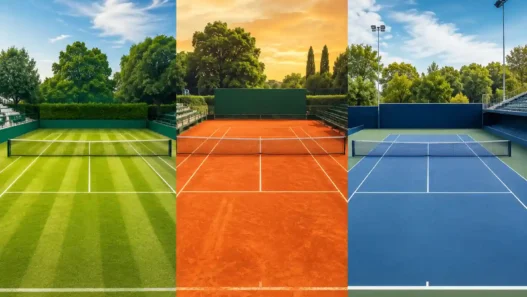
The simplest bet to place in tennis is to choose the winner of the match outright and this is where the majority of the tennis betting action is. The odds here are based on a combination of current ranking, recent form, head-to-head history and crucially, surface, as tennis is one of the few sports in which the surface on which the game is being played materially alters the likely course of a match.
A player who plays well on hard courts doesn’t necessarily translate that into the clay, where longer rallies and heavier topspin reward a completely different skill set. The French Open this year was a prime example of that, as Alexander Zverev earned his first Grand Slam title on the clay at Roland Garros after years of near-misses on faster surfaces. It’s a reminder of just how much surface can shape which players sportsbooks and bettors consider live threats at a given tournament.
Set Betting, Handicaps, and Total Games Markets
Tennis has a number of markets that are based on the structure of the match rather than just picking a winner. Set betting means you have to predict the exact scoreline, so a straight sets win or a match that goes the distance. This type of bet has a lot longer odds than a simple match-winner bet due to the extra precision required.
In tennis, handicap betting, or spread betting, involves adding or subtracting a number of games from a player’s total in an effort to even out an otherwise uneven matchup. But sometimes the favorite is so strong that the line needs to be made more competitive. For example, a heavy favorite might be given a game handicap of minus-4.5. Thus, the favorite would have to win by at least five games for that bet to cash.
Total games markets are similar to over-under betting in other sports and will ask if the total number of games played across the match will be above or under a specified number. These markets often favor bettors who have a good understanding of playing styles, as a match between two big servers who are rarely broken tends to play out very differently, and often longer, than a match between two grinding baseliners who are more prone to long, broken-serve rallies.
Grand Slam Betting: Bigger Fields, Bigger Markets
The four Grand Slams are the biggest betting events in the tennis calendar, and it’s not hard to see why. With a 128-player draw it creates a huge amount of possible match-ups, and outright tournament winner markets plus individual match odds give bettors dramatically more options than a standard tour-level event.
And remember, men’s Grand Slam matches are best of five, which complicates the matter further. Longer matches give a stronger player more time to recover from an early set loss, something that is much less predictable when matches are best of three, as they are everywhere else on the men’s tour. That dynamic was on full display in this year’s Australian Open final, when Carlos Alcaraz needed four sets to dispatch Novak Djokovic in a match that swung back and forth before Alcaraz finally completed his career Grand Slam.
Props and Futures: Betting Beyond the Match Winner
Tennis proposition bets can be very specific, including markets like total aces served, whether the match will go to a deciding set or which player will win the first set. These props are popular with bettors who closely follow individual playing styles as a big server’s ace total or a grinder’s possibility of forcing a decider often tell more about how a match will actually play out than the simple win-loss odds alone.
Futures betting is when gamblers wager on events that won’t be settled for weeks or months, such as who will win a Grand Slam title or finish the year ranked world No. 1. The odds are constantly changing depending on results, form and injuries, just like this season when Carlos Alcaraz’s wrist injury saw his ranking, and his futures odds across multiple markets, drop while he was still one of the most talented players in the sport.
What Actually Moves Tennis Betting Lines
One of the biggest swing factors for tennis betting across a season is surface transitions. The tour shifts between clay, grass and hard courts several times each year, and player form can change drastically with each. Just the kind of pattern that this year’s French Open to Wimbledon stretch showed. A player who struggled on clay might suddenly look like a different player once the tour moves to grass just weeks later.
Injuries and fatigue are huge as well, especially considering how physically demanding a full tennis season actually is. Even if the injury isn’t bad enough to force a withdrawal, a player can perform well below their usual odds. This is where it can be really useful to keep track of recent retirement history, physical struggles in previous matches and even a player’s tournament schedule leading into an event. This can provide real value that the simple ranking based odds do not always capture.
Finally, weather conditions are something to watch for, especially at outdoor hardcourt and grass events, as wind and heat can have much more of an impact on certain styles of play than others. Big servers tend to be more exposed to windy conditions than steady baseliners, a small detail that seasoned tennis gamblers tend to take into account more than the average tennis fan.