







Dark Mode Light Mode

Keep Up to Date with the Most Important News

By pressing the Subscribe button, you confirm that you have read and are agreeing to our Privacy Policy and Terms of Use
Young tennis stars to watch in 2026 who can become future grand slam champions
Tennis Court Surfaces Explained: Grass, clay, and hard courts compared
Hot New Post. Sustainable Architecture for Future Urban Environments

Tennis Court Surfaces Explained: Grass, clay, and hard courts compared

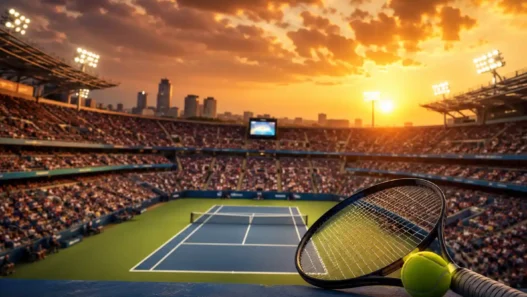
Tennis-Court-Surfaces-Explained-Grass-clay-and-hard-courts-compared Tennis-Court-Surfaces-Explained-Grass-clay-and-hard-courts-compared

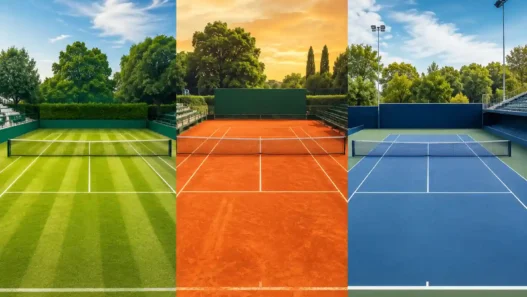
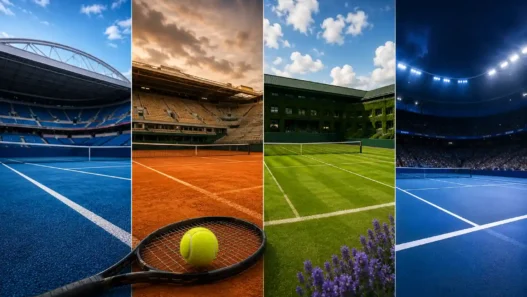
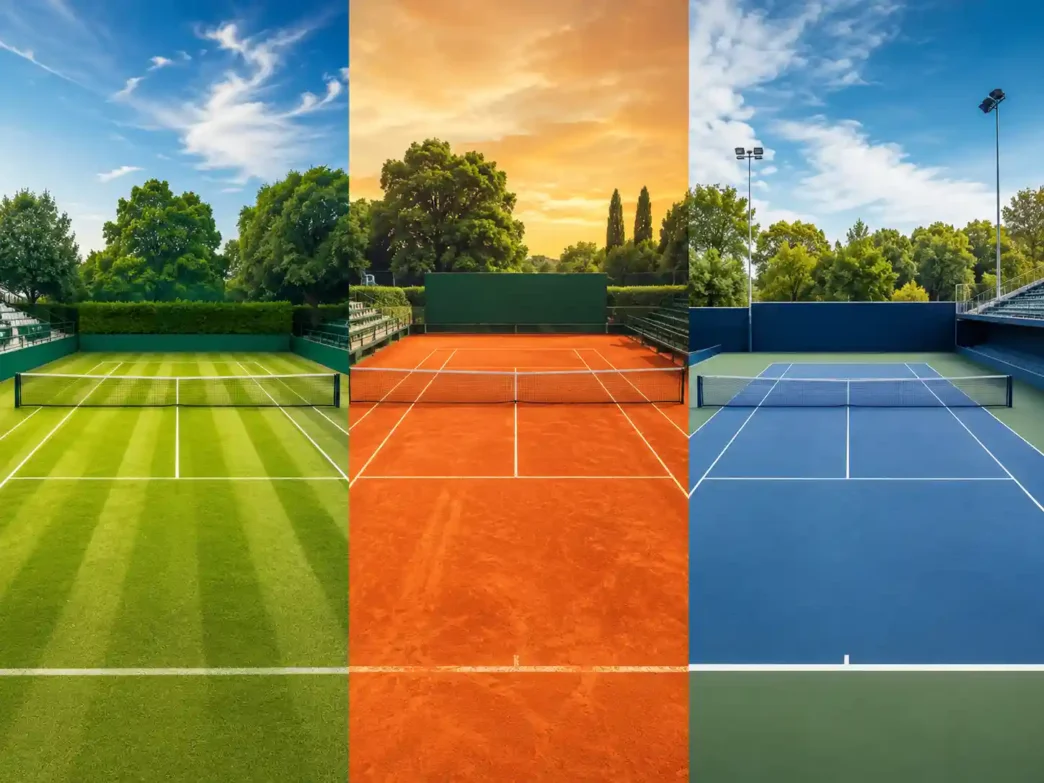
Ask any tennis player what surface they prefer and you’ll get a passionate answer. The court beneath their feet changes just about everything about how the game is played. The speed of the ball, the height of the bounce, the footing and even the length of the match can be radically different depending on whether a tournament is played on clay, grass or a hard court, and that difference is part of what makes the tennis calendar so genuinely different from most other sports. This guide explains how each surface actually plays and why some players thrive on one and struggle on another.

Clay Courts

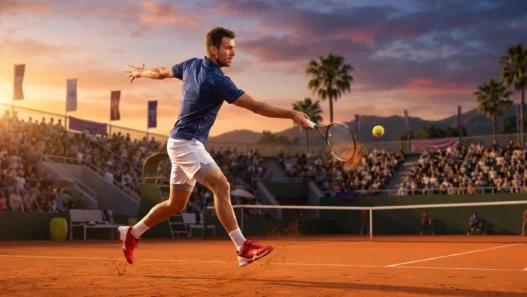
Clay courts are made of crushed brick, shale or stone, and generate the slowest ball speed and highest bounce of any professional tennis surface. That combination rewards patience and heavy topspin rather than outright power, as the ball tends to sit up higher and travel more predictably, giving players with good defensive skills more time to get to shots that would be outright winners on faster surfaces.

Rallies on clay are usually much longer than on hard courts or grass, so physical stamina and mental toughness are as important as pure shot-making skill. The surface also allows players to slide into their shots, a distinctive defensive technique clay-court specialists spend years perfecting and one that rarely translates cleanly to hard courts or grass.The French Open at Roland Garros remains the sport’s top clay-court event, and this year’s tournament showed exactly why clay writes such different stories to the rest of the calendar.

 Grass Courts

Grass is the fastest, lowest-bouncing surface in pro tennis and that combination favors aggressive serving, quick approaches to the net and players comfortable finishing points early rather than grinding out long rallies. The ball skids through low and quick after the bounce so reaction time is much more valuable than on the slower, more predictable bounce of clay.

That speed also makes grass notoriously unpredictable in surprising ways. Grass can be patchy, especially as tournaments progress and the grass itself is trampled down under the pressure of match after match. That is part of the reason why grass-court results can change considerably between the first week of a tournament and the final weekend.

Wimbledon is the sole Grand Slam played on grass, and the all-white dress code and understated atmosphere of the tournament are a reflection of the surface’s deep roots in the sport’s earliest traditions. 

Hard Courts 

Hard courts are asphalt or concrete with an acrylic surface layer. This middle-ground quality is part of the reason hard courts have become the most common surface on both the ATP and WTA tours, offering a fairly neutral test that doesn’t hugely benefit one particular playing style over another.

But not all hard courts are created equal. The different formulas for the acrylic coating and the different amounts of sand mixed into the surface can cause some hard courts to play much faster or slower than others, which is why some hard-court tournaments are sometimes described by players as feeling more like a clay or grass court in terms of how the ball actually plays once it hits the ground.

Both the Australian Open and the US Open are played on hard courts, though each event brings its own distinct atmosphere and climate on top of the shared surface.

How Surface Shapes Playing Styles

Some playing styles translate far more readily between surfaces than others which is precisely why some players are known as surface specialists and others can compete at an elite level everywhere. A big flat-hitting serve is a great weapon on grass, but loses some of its bite on the higher bounce of clay. A big topspin forehand designed to grind out long clay-court rallies doesn’t always translate into the same overwhelming advantage in the faster, lower-skidding conditions of grass.

That’s why, winning all four majors over the course of a career, a career grand slam, is still one of the most difficult accomplishments in tennis. 

The Physical Toll of Each Surface

But more than a matter of style, each surface also presents different physical demands on the players. The long rallies and sliding of clay put a lot of stress on a player’s legs and core over a long tournament, and clay events often feel like the most physically draining part of the season, even if the matches themselves are not always as visually dramatic as grass-court matches.

By contrast, hard courts are generally considered the most punishing surface for a player’s joints over time, with the hard, largely unyielding surface contributing to a repetitive impact that can build into chronic problems over a long career. Grass courts are usually easier on the body because of shorter points and softer surface, but the erratic bounces and fast changes of direction on grass also pose special injury hazards, especially to ankles and knees.
Keep Up to Date with the Most Important News

By pressing the Subscribe button, you confirm that you have read and are agreeing to our Privacy Policy and Terms of Use
Add a comment Add a comment

Leave a Reply

Your email address will not be published. Required fields are marked *

Previous Post
Young-tennis-stars-to-watch-in-2026-who-can-become-future-grand-slam-champions

Young tennis stars to watch in 2026 who can become future grand slam champions

Frequently Asked Questions

Clay courts are the slowest of the three major surfaces, which means a higher bounce and slower ball speed that rewards patience, heavy topspin and long rallies over quick, aggressive point construction.

Grass gives a low, quick bounce, so opponents have less time to react. This promotes aggressive serving and net play. Another factor is that as a tournament progresses, the surface can also wear down and become less predictable.

Playing styles translate differently to each surface, depending on the ball speed and bounce height. Grass’s low bounce tends to favour a powerful, flat serve, while a heavy topspin game based on long rallies is often better suited to the slower, higher-bouncing conditions of clay.

A career Grand Slam is winning all four majors at some point in a career, on three different surfaces. There are only a handful of players in the history of tennis who have mastered clay, grass and hard courts well enough to pull it off, which requires such very different skill sets.

The general consensus is that over time, hard courts are the hardest on the joints because they’re so firm and non-giving, while clay is harder on the legs and core from long rallies and sliding.