





















































Tennis is a confusing sport to outsiders. With a series of tours and a rolling ranking system and four majors that mean so much more than any other tournament on the calendar, it can be hard to keep track of things. But once you understand the pieces in place, it’s far more rewarding to follow the sport week to week, especially with 2026 already providing some truly interesting storylines on the men’s and women’s side.
This guide walks you through the structure of professional tennis, from the tours themselves, to how a player really becomes world number one, and explains what makes the Grand Slams the sport’s biggest events.
The ATP and WTA Tours: How Men’s and Women’s Tennis Are Organized
Professional tennis has 2 separate world tours. The men’s game is governed by the ATP Tour, the women’s game by the WTA Tour, each with its own season-long schedule of tournaments, ranking system and season-ending championship event.
Both tours run their events in a tiered format. At the top of the pyramid are the Grand Slams, jointly recognized by both tours, which offer the most ranking points and prize money of any events on the calendar. Below that the ATP operates Masters 1000 events and the WTA operates similar 1000 level events.
Then there are smaller 500 and 250 level events on the men’s side and their WTA equivalents. At the base of the pyramid are the ATP Challenger events on the men’s side and the WTA 125 tournaments on the women’s side. This is the direct feeder circuit, where players earn ranking points to eventually qualify for main tour events.
How Tennis Rankings Actually Work
Tennis rankings are not a simple season long point total but a rolling 52 week system. Every time a player plays in a tournament , he earns points the further he gets . Those points stay on his ranking for exactly 52 weeks , then they drop off when that tournament comes around again next year .
The ATP and WTA do not count all tournaments a player enters, but only their best results from a certain number of tournaments, 19 for ATP and 16 for WTA. This means a player can’t simply enter every event going to boost their ranking, because any results outside of that cap are discarded, unless they replace a weaker result already on the players ranking sheet.
Jannik Sinner, mid-2026, is the world No. 1 in the ATP rankings, with Carlos Alcaraz at No. 2, and the rivalry has been the defining characteristic of men’s tennis for the last few seasons. In the women’s game it’s a similarly tight picture at the top with Aryna Sabalenka at No.1 in the WTA ranks and Iga Swiatek one of the nearest challengers.
The Four Grand Slams
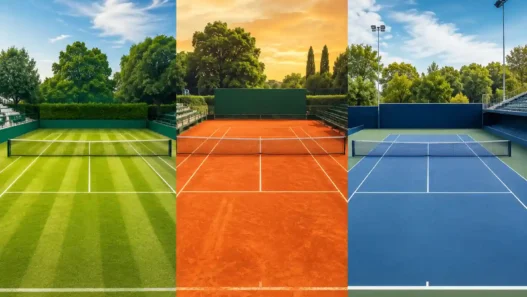
Grand Slam tournaments are the ultimate in professional tennis and winning one continues to be the most obvious measure of a player’s legacy in the sport. There are four majors every year, each one with its own surface, history and character.
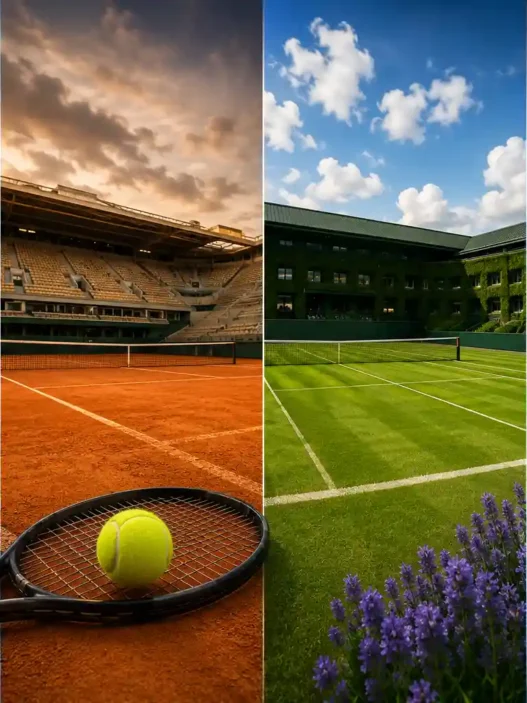
The Australian Open kicks off the season every January on hard courts in Melbourne, often setting an early tone for the year’s storylines. The French Open, played on Paris’s iconic red clay at Roland Garros in late May and early June, is a surface that rewards patience, heavy topspin and elite physical endurance more than any other major.
Wimbledon is the most tradition-steeped event in the sport, played on grass courts at the All England Club every June and July, with a dress code of all-white and a different, faster style of play that grass surfaces tend to produce. The US Open in New York closes out the major season each August and September, played on hard courts and with some of the loudest, most electric crowd atmospheres in tennis.
This year’s Wimbledon was full of drama on both sides of the draw. Jannik Sinner defended his title, defeating Alexander Zverev, who claimed his first Grand Slam at the French Open a few weeks ago. On the women’s side, Linda Noskova won her first major title in three sets over fellow Czech Karolina Muchova to become the youngest Wimbledon women’s champion in 15 years.
Why Grand Slams Matter So Much More Than Other Events
Grand Slams award significantly more ranking points than any other tournament on the calendar, but their importance goes well beyond the numbers. These are best-of-five-set matches on the men’s side, a format that tests physical endurance and mental resilience in a way three-set matches simply don’t, and the two-week tournament length means players have to sustain peak performance across seven rounds rather than the four or five typical of smaller events.
Prize money at the majors also dwarfs the rest of the tour by a significant margin, and the historical weight attached to these titles shapes how careers get remembered. A player with a strong overall win record but no major titles is typically viewed very differently than a player with fewer career wins but multiple Grand Slam trophies, which is why even the sport’s most dominant regular-season performers are ultimately judged first and foremost on their Grand Slam résumés.
Beyond Singles: Doubles, Team Events, and the Wider Tennis Calendar
Singles competition gets the most attention, but professional tennis has a full doubles circuit that runs alongside the singles tour at pretty much every tournament. There are even specialists who make their entire careers on doubles play instead of singles competition. Mixed doubles brings another dimension, particularly at the majors, where men’s and women’s players are paired for a shorter, more explosive style of competition.
Team competitions round out the calendar as well. The Davis Cup represents the top men’s team event, while the Billie Jean King Cup serves the same function for women’s tennis, both organized around national teams competing across various rounds throughout the year. The season-ending ATP Finals and WTA Finals also carry major prestige, bringing together only the top eight qualified players or doubles teams in each respective tour to close out the year in a round-robin format before knockout semifinals and a final.
How Players Qualify for the Biggest Events
Seeded positions are awarded to the top players and are designed to keep them apart in the draw until the late stages of the tournament. Direct entry into the main draws of Grand Slams is based on a player’s ranking as of a specified cut-off date before the tournament. Players just outside the cut for direct entry can enter qualifying rounds, a mini-tournament taking place in the days before the main event where a smaller field competes for a limited number of spots in the main draw.
Wild cards are another way in, normally given to up-and-coming young talents, former champions returning from injury, or players with strong national ties to the host tournament. The system means that Grand Slam fields are composed of the world’s top-ranked players, qualifiers who have battled through several rounds to make the main draw and wild cards hoping to capitalize on a chance that may never come again.
What Makes 2026 an Interesting Season to Follow
There are already plenty of reasons to watch this season. Sinner and Alcaraz continue to swap the top spot in the men’s game but Zverev’s breakthrough French Open title brought a genuine new name to the Grand Slam winners’ circle. Meanwhile, the women’s game has been disrupted by a wave of emerging talent threatening Sabalenka’s grip on the world No. 1 ranking, including Noskova’s breakthrough run to her first major title at Wimbledon.
With the US Open still on the calendar and the ATP and WTA Finals on the horizon to bring the year to a close, many of the year’s biggest stories are still being written. The top of both tours is unpredictable, which makes 2026 one of the more intriguing tennis seasons in recent memory for fans and bettors tracking form heading into the remaining majors of the season.