

















































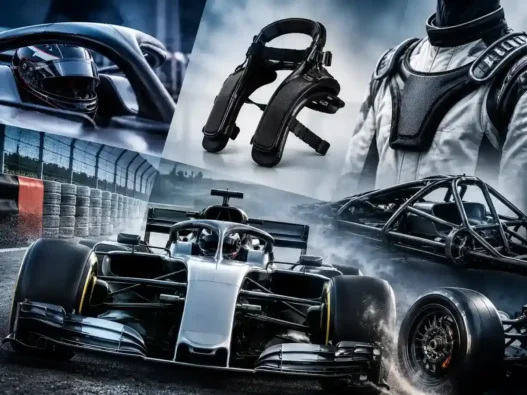
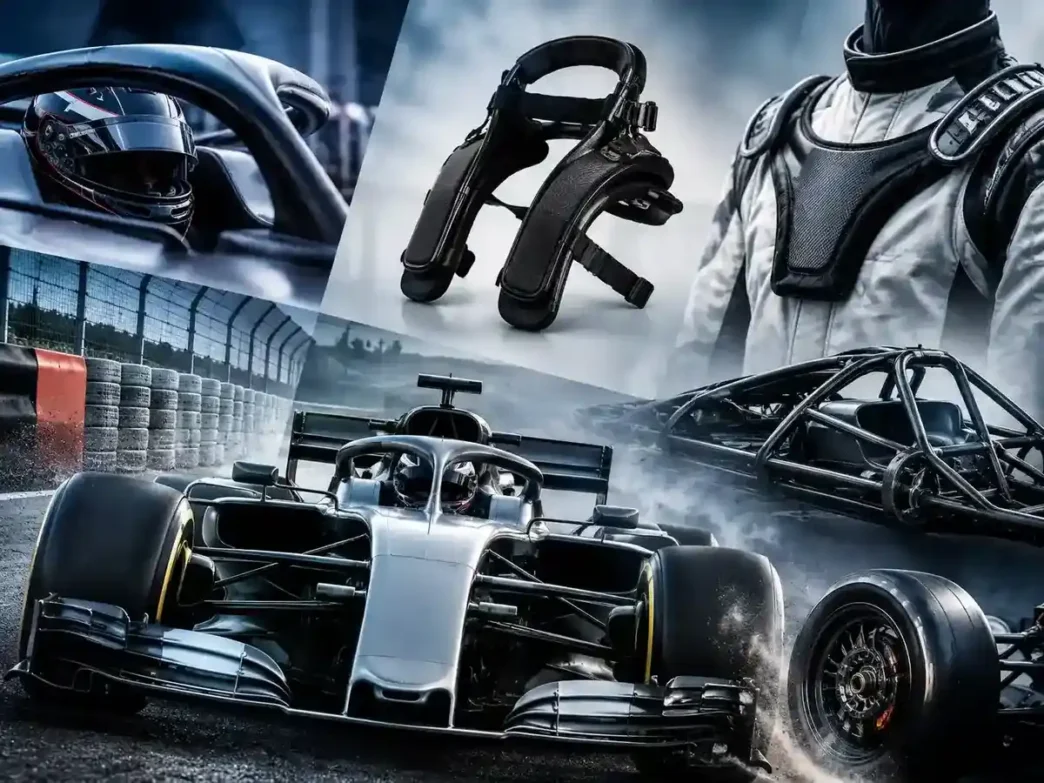
Racing is a very dangerous sport but in terms of looking after drivers it does not look anything like it did twenty-five years ago. Crashes that would have ended careers, or worse, routinely see a driver climb out and walk away often within seconds of a collision that would have been fatal in another era.
It didn’t just happen by chance. It’s years of engineering, painful lessons learned from tragedies and a real cultural shift in all the major series to make safety a fundamental part of competition rather than an afterthought. This is a look at the technology and regulations that have helped to make modern motorsport safer.
Formula 1’s The Halo
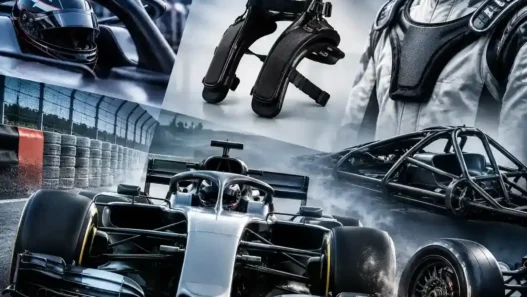
Few safety devices have caused more debate than the halo. The curved titanium structure that sits over an F1 driver’s head was introduced in 2018. At first, many fans and even some drivers ridiculed it, claiming it broke the visual identity of open-wheel racing. The criticism disappeared quickly, as the halo began saving lives in real time.
The design is meant to absorb massive impact forces, shielding drivers from flying bits of debris, other cars and even freak accidents that would have been unsurvivable in previous decades. The strongest evidence of concept came at the 2020 Bahrain Grand Prix when Romain Grosjean’s fireball crash saw the halo help him escape relatively minor injuries from a car split in half and engulfed in flames.
The HANS Device: Protecting the Neck and Spine
Basilar skull fractures were one of the leading causes of fatalities in high speed crashes in most major racing events prior to the compulsory Head and Neck Support device (HANS). The device, a collar around the driver’s helmet, restricts head movement during rapid deceleration, preventing the violent forward motion that had so often proved fatal.
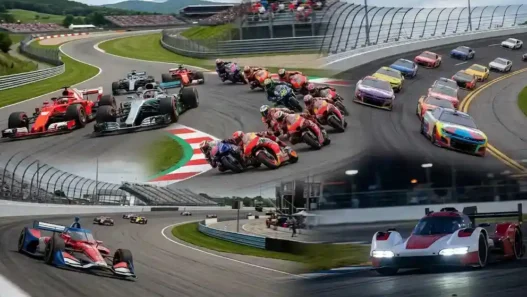
NASCAR mandated the device after the death of Dale Earnhardt at the 2001 Daytona 500, a moment many regard as a turning point for driver safety in American racing. Formula 1 had begun mandating similar head restraint systems a year earlier, and today virtually every major circuit racing series, from IndyCar to sports car endurance racing, mandates some form of head and neck restraint technology as a baseline safety standard.
SAFER Barriers
For decades, the concrete and steel walls that rim most oval tracks were themselves a major source of injury, a car hitting solid concrete at racing speed and transferring almost all that energy to the driver. But the equation changed entirely with the Steel And Foam Energy Reduction barrier a collaboration between the University of Nebraska and Indianapolis Motor Speedway.
They have layers of steel tubing behind foam to absorb and spread out the energy of a crash before it gets to the car, and they spread out the forces of an impact over a longer period of time instead of dumping them all at once.
Chassis Design and the Survival Cell
The chassis of modern racing cars are built around what engineers call a survival cell: a reinforced structure that encloses the driver and is designed to survive even if the rest of the car is destroyed around it. The pinnacle of this concept in Formula 1 is the carbon fibre monocoque chassis. The chassis is designed to absorb and divert crash energy away from the cockpit. The survival cell is mostly un-deformed.
For 2022, NASCAR introduced its Next Gen car, using a similar philosophy to stock car racing with a beefed-up central safety cage and improved crash structures front and rear. They are designed to crumple gradually. They’re meant to fail in absorbing energy and to protect the ‘box’ the driver is sat in.
Fire Suppression and Fuel Cell Technology
Fire was one of the most feared outcomes in motorsports as early race cars used to catch fire after a crash almost instantly. Today’s fuel cells use a flexible, puncture-proof bladder designed to prevent fuel leaks even in the event of an extreme impact, greatly reducing the chances of post-crash fires compared with the rigid metal fuel tanks of the past.
Onboard fire suppression systems are now automatic or can be activated manually by a driver, safety crew or race control flooding the cockpit and engine area with extinguishing agent within seconds of a fire being detected. The drivers themselves don several layers of overlapping protection against a threat that used to take lives with alarming regularity: fire-resistant driver suits, gloves and underwear made from advanced Nomex fabrics.
MotoGP’s Approach: Protecting Riders Without a Chassis
The safety challenge in motorcycle racing is fundamentally different to car racing because there is no chassis around the rider when things go wrong. In MotoGP the answer has been advanced airbag suits that inflate protective airbags around a rider’s shoulders, collarbone, chest and back in a fraction of a second, long before a crash actually takes place.
As rider equipment has improved, so has track design, with large gravel traps and paved runoff zones on the latest MotoGP courses to slow a sliding rider or bike down before it hits any barrier. Race control has also become much more aggressive in throwing red flags for debris on the track or standing water, a reflection of a broader cultural shift that sees rider safety as a reason to stop a session rather than race on through hazardous conditions.
Medical Response and Track Safety Infrastructure
But it’s not only the equipment that has changed motorsport safety, the speed and sophistication of the medical response has increased just as dramatically. Modern race series have dedicated medical cars which remain close enough to the field to be able to reach an incident within seconds . The trauma specialists are trained specifically for motorsport injuries , not general emergency medicine alone .
The infrastructure on the side of the track has also evolved, with the standardisation of extraction techniques to remove an injured driver from a car without aggravating possible spinal injuries, and the availability of helicopter evacuation at most major circuits to transfer a seriously injured driver to a trauma centre within the so-called golden hour which is often the difference between survival and death. None of the equipment innovations discussed above would matter nearly as much without this parallel investment in getting drivers the right care as quickly as possible after a crash.
The Tragedies That Forced Change
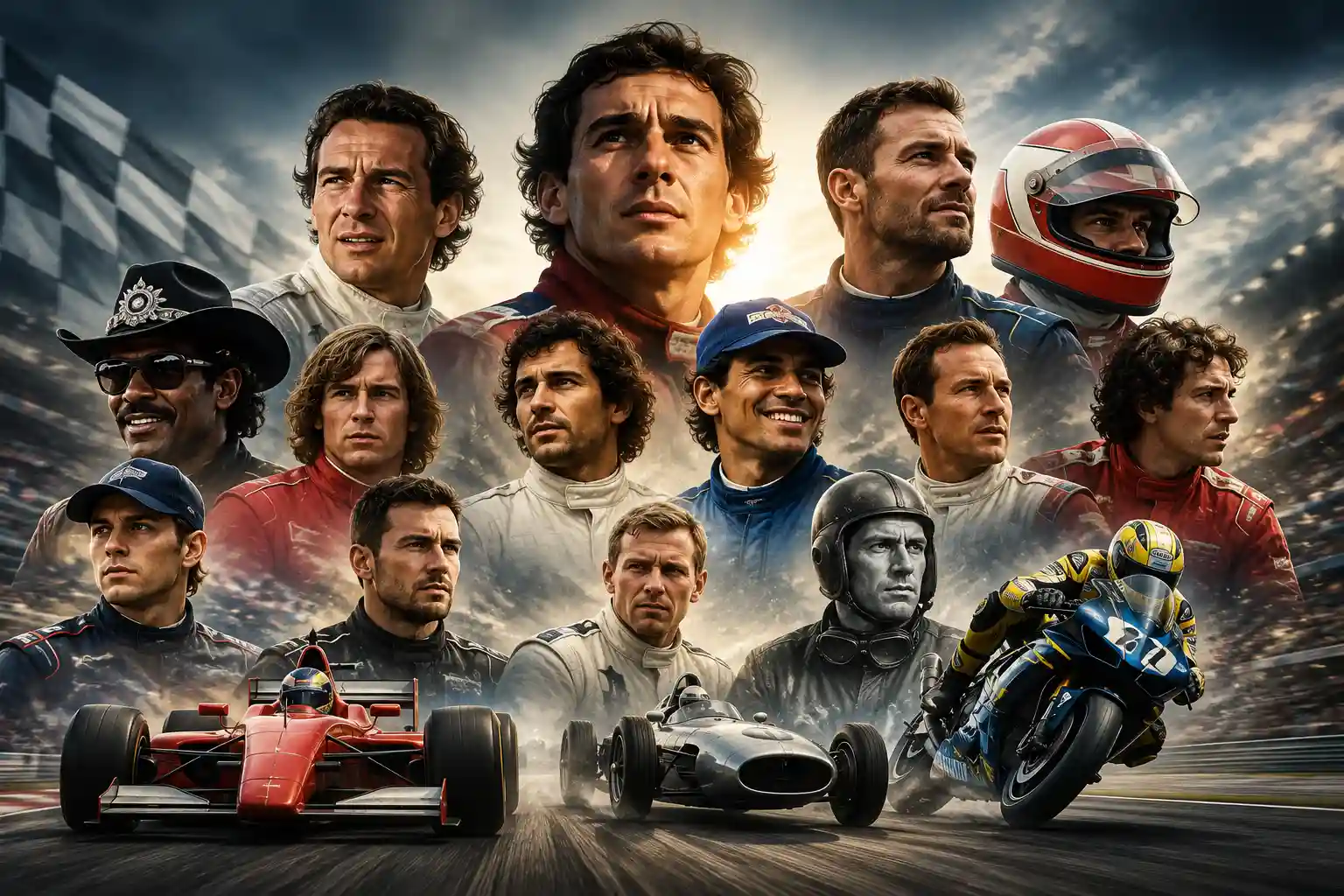
It’s worth being honest about how much of motorsport’s safety evolution only came after devastating losses. Ayrton Senna’s death at Imola in 1994 triggered a series of F1 safety reforms that altered circuit design and car construction standards for the next decade. Dale Earnhardt died seven years later and did the same thing for NASCAR, directly leading to mandatory HANS devices and the implementation of the SAFER barrier across American oval racing.
MotoGP has also had its own painful lessons, with rider fatalities in the junior categories leading to the mandate of airbag suits and tighter track licensing standards in the 2010s. The uncomfortable truth is that meaningful safety regulation in motorsport has often been reactive rather than proactive, but governing bodies in every major series now spend heavily on simulation, crash testing and predictive analysis precisely so that they can get ahead of the next tragedy, rather than simply responding to it.
Why Safety Technology Still Matters in 2026
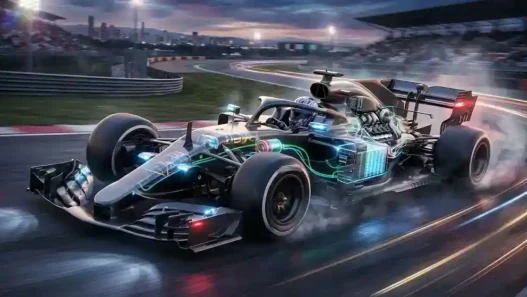
But even with all that progress, safety is an ongoing, evolving conversation, not something that is solved. Several drivers voiced fears about closing speeds under the new rules earlier in the season after Formula 1’s 2026 regulation reset brought smaller, lighter cars and new hybrid power units. Mid-season adjustments to energy deployment limits were the governing bodies’ response, a reminder that even a sport so deeply invested in driver protection must keep evolving as the technology itself continues to change.
But perhaps the most important part of the story is that continuing willingness to adjust, rather than treating today’s safety standards as the finished product. The drivers walking away from crashes today that would have been fatal a generation ago are not benefiting from a single breakthrough, but from a sport that has committed to treating safety as something that never stops getting better.