










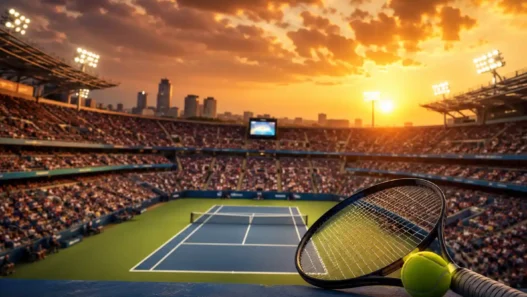

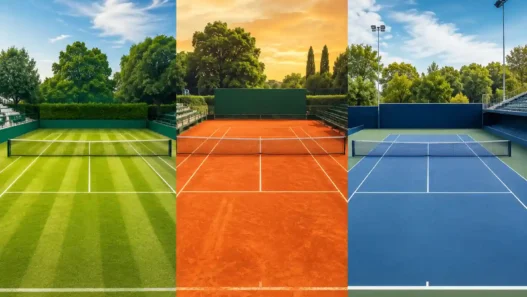






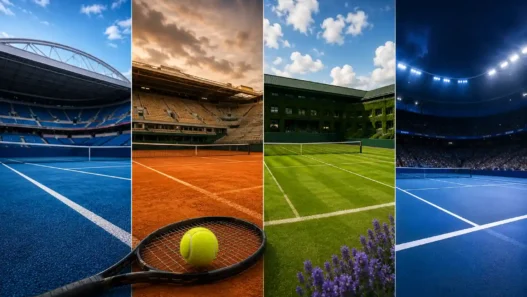

















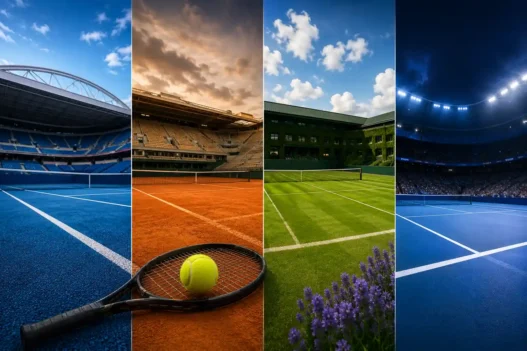
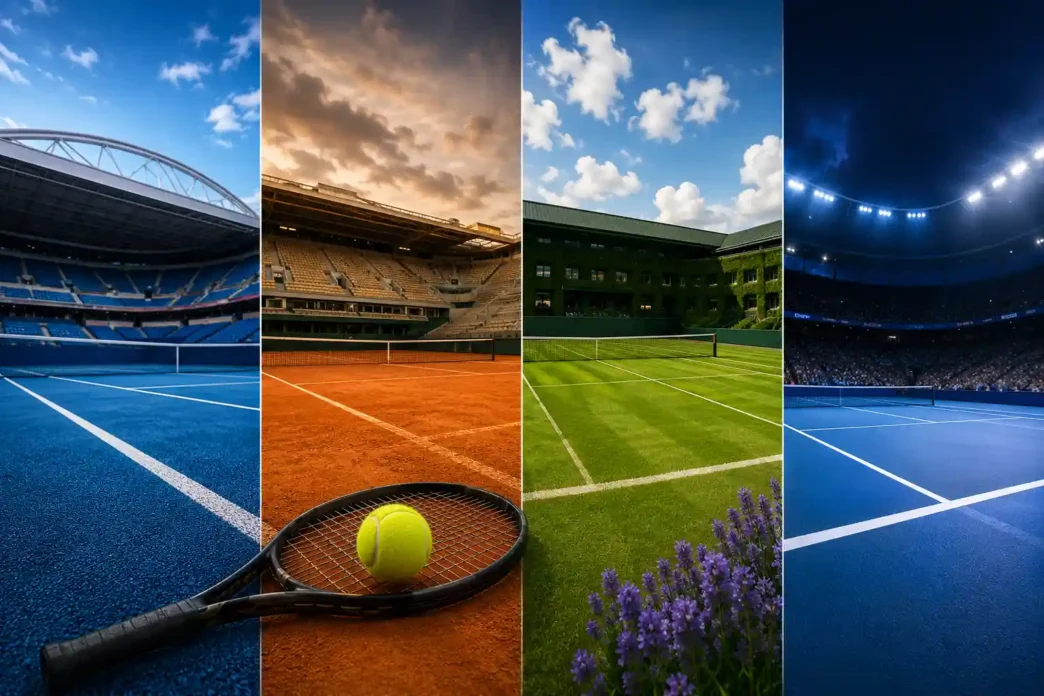
Four tournaments in professional tennis stand above all others. Win one and the player’s career is changed overnight. Win a few, and their name enters a conversation that spans generations. Tennis’s four Grand Slams, the Australian Open, French Open, Wimbledon and US Open, each bring their own surface, history and personality to the sport’s biggest stage.
The 2026 Slam season has already been a dramatic one, with a career-defining milestone in Melbourne, a stunning underdog run in Paris and a changing of the guard on the grass at Wimbledon. This guide considers each major individually and explains what makes the four of them, combined, the ultimate test of tennis greatness.
The Australian Open
The Grand Slam season starts in January with the Australian Open, held in the often stifling conditions of the hard courts of Melbourne Park. The tournament is held in the late Southern Hemisphere summer, when it is often brutally hot, and Melbourne’s lighthearted, sunny atmosphere has earned the event its unofficial nickname, “The Happy Slam.”
One of the biggest milestones in recent tennis history came with the 2026 edition. Carlos Alcaraz completed his career Grand Slam in his first Australian Open title, beating Novak Djokovic in an exhilarating four-set final and becoming the youngest man in the Open Era to win all four majors at just 22 years old. The victory also ended Djokovic’s perfect 10-0 record in Australian Open finals. On the women’s side, Elena Rybakina came from a set down to defeat world No. 1 Aryna Sabalenka to win the second major of her career and deny Sabalenka a fifth Australian Open trophy.
The French Open
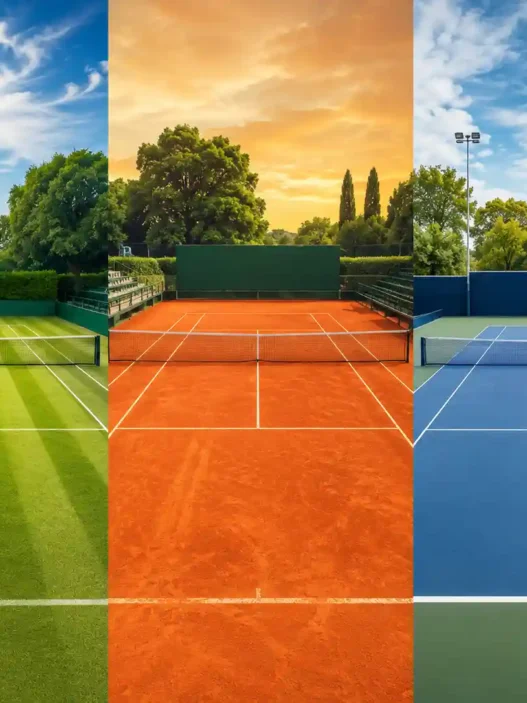
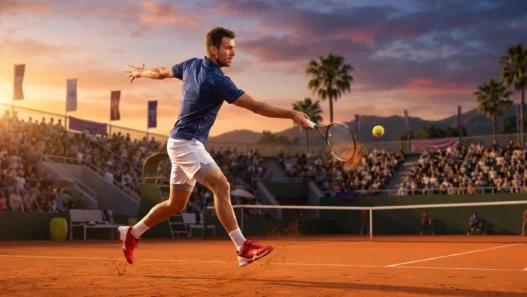
The French Open, held every May and June at Roland Garros in Paris, is the only Grand Slam played on red clay, a surface that slows the ball and favors heavy topspin, long rallies and elite physical conditioning over brute power. Points here tend to last much longer than on hard courts or grass, and the tournament has long been considered the most physically demanding of the four majors.
This year’s French Open delivered two of the more surprising storylines in recent Slam history. On the men’s side Alexander Zverev won his first major title in a five-set final against Flavio Cobolli to become the first German man to win a Grand Slam since Boris Becker in 1996. It was another amazing women’s final, with 19-year-old Mirra Andreeva beating qualifier Maja Chwalińska, the lowest-ranked finalist in tournament history, to win her first big title and become the youngest French Open women’s champion since Monica Seles in 1992.
Wimbledon
Wimbledon is the oldest tennis tournament in the world and the most tradition-bound in the sport. It is held every June and July at the All England Club. Players are required to adhere to an all-white dress code, matches are played on natural grass courts which produce faster, lower-bouncing rallies than any other surface, and the understated elegance of the tournament is in stark contrast to the louder, more commercial atmosphere at the other three majors.
Jannik Sinner successfully defended his Wimbledon crown this year, defeating Alexander Zverev to capture back-to-back titles on the grass. On the women’s side, Linda Noskova delivered one of the tournament’s most memorable runs, coming back from 5-2 down in the second set to eventually defeat fellow Czech player Karolina Muchova in a three-set final, becoming the youngest Wimbledon women’s champion in fifteen years at just 21 years old.
The US Open
The US Open is played on hard courts at the USTA Billie Jean King National Tennis Center in New York each August and September to round off the Grand Slam calendar. It has been the loudest and most unpredictable atmosphere of the four majors, with night matches played under the lights, packed crowds and an energy bordering on chaotic, a world away from the hushed reverence of Wimbledon.
The US Open has a reputation for thrilling five-set affairs and shock breakthrough runs, in part because New York crowds add an extra degree of pressure and atmosphere to matches than the more subdued environments found on other stops on the circuit. Alcaraz’s career Grand Slam, Zverev and Andreeva’s breakthrough titles, all have been major storylines in 2026 before the year’s other three majors. The US Open later this year has real intrigue as the final chapter of what’s already shaping up as one of the most eventful Slam seasons in recent memory.
Why winning all four grand slams is so rare
Winning a career Grand Slam is one of the hardest things to do in tennis. That’s to win all four majors at any time in a career. That’s due to the surfaces requiring such different skill sets. A player made for grass court aggression and quick points doesn’t necessarily mean that translates to clay’s longer, more physical points and that is exactly why so few players in the history of tennis have been able to win all four.
Alcaraz’s 2026 Australian Open title gave him the career Grand Slam as the ninth man in the Open Era to do so and he’s among the youngest ever to achieve the feat at 22 years old. That kind of surface versatility, winning on hard, clay and grass with equal success, remains one of the clearest markers that separate true legends of the sport from great champions.
How ranking points and prize money work at the majors
The Grand Slams offer significantly more ranking points than any other tournament on tour and the prize money is no different. The 2026 Australian Open boosted its total purse to a record, with the singles champions each getting almost $2.79 million. The French Open upped its overall prize money by more than nine percent from last year, and some of the biggest percentage increases went to players in the earliest rounds.
That fiscal gap is much more important than headline numbers. A deep run at a Grand Slam can change the course of a season for a player, pushing him up the seeding in future events and altering the profile of the opponents he might meet on the way. The ranking points you get at the majors are worth so much more than the ones you get at lower-tier events.
What makes each slam’s draw and format unique
All four majors use the same 128-player single-elimination draw format for the main singles events, but they still differ in small format. The men’s matches in all four Grand Slam tournaments are best-of-five sets, while the women’s matches are best-of-three sets, a format difference that sets the majors apart from almost all other tour-level events for men, which are best-of-three sets.
Each event has its own peculiarities, giving texture to the surface. The French Open notably kept human line judges in 2026, unlike the other three majors, all of which have switched to electronic line-calling technology. The grass courts wear and become unpredictable as the tournament progresses, often providing different playing conditions between the first week and the closing weekend.