


















































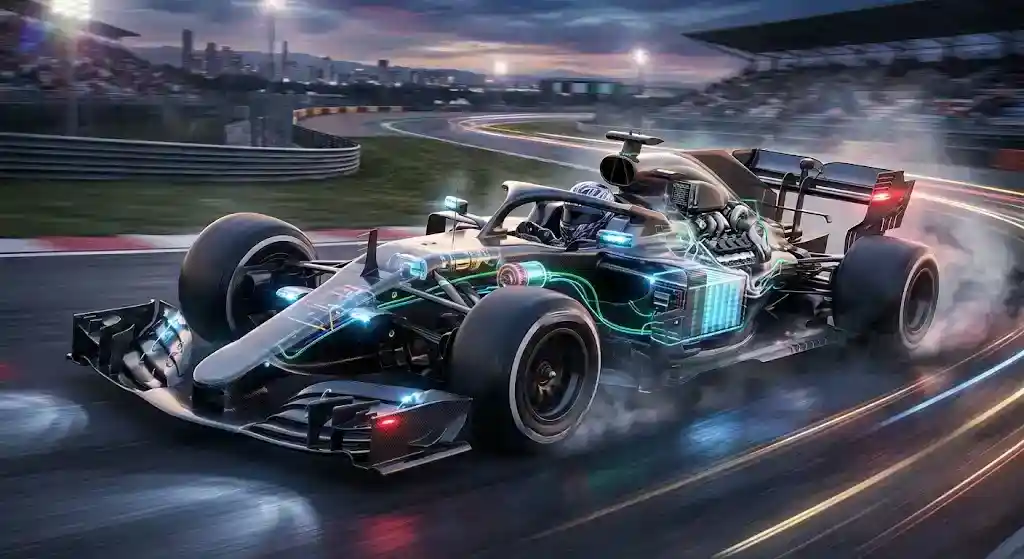
Today’s race cars look nothing like the ones that raced even fifteen years ago. Hybrid power units, active aerodynamics and data systems once the preserve of the research lab are now at the centre of how these cars actually perform on track. Understanding that technology changes the way you watch a race, because so much of what determines a winner is done long before the lights go out.
This guide From SportsArcane takes a deep dive into the engineering of three series that address speed with very different technical philosophies and explains why those differences matter on race day: Formula 1, NASCAR and IndyCar.
Formula 1: Hybrid Power and Active Aerodynamics
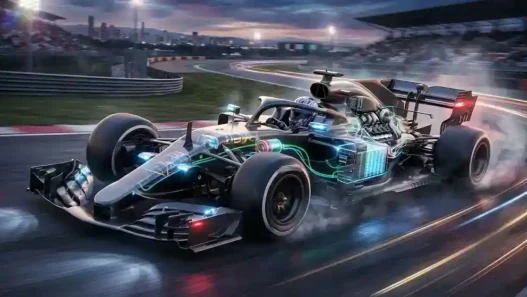
The 2026 Formula 1 power units are one of the biggest engineering changes in the history of the sport. These are 1.6-litre turbocharged V6 hybrid units but they now get almost half their overall power from electrical energy instead of combustion – a huge step up from the lesser hybrid input of previous seasons. The cars also operate on advanced sustainable fuel as part of a broader push to keep the sport’s technology relevant to the wider automotive industry.
Aerodynamics has also changed as dramatically. Every 2026 car has active aerodynamics for the first time in F1 history, with wings that automatically flatten on straights to reduce drag and then reopen through corners to create grip. Chassis dimensions shrank in tandem, with a shorter wheelbase and narrower tires designed to reduce the turbulent wake that made following another car so difficult in previous generations.
Nothing of this is possible without extraordinary amounts of data. F1 cars have over 100 sensors monitoring everything from tyre temperature to suspension load, in real time, feeding data back to trackside engineers who make strategic decisions in seconds. Energy deployment is a discipline in its own right now, with teams managing how and when to release battery power across a lap to optimise both straight-line speed and overall efficiency.
NASCAR: Built for Contact, Engineered for Parity
NASCAR’s engineering philosophy is at the other end of the spectrum from the aerodynamic arms race of Formula 1. All Cup Series teams use the “Next Gen” car, a single chassis platform built by all manufacturers specifically to level the technical playing field and put more of the outcome in the hands of the drivers rather than engineering budgets.
This is not to say that NASCAR has shunned innovation. The Next Gen platform was the first in the sport to feature independent rear suspension, as well as a wider track and larger wheels that dramatically changed how these cars handled compared to previous generations. Horsepower is deliberately limited based on track type, with 2026 rules increasing short-track and road-course power to 750 horsepower specifically to help drivers pass more easily where overtaking had become difficult.
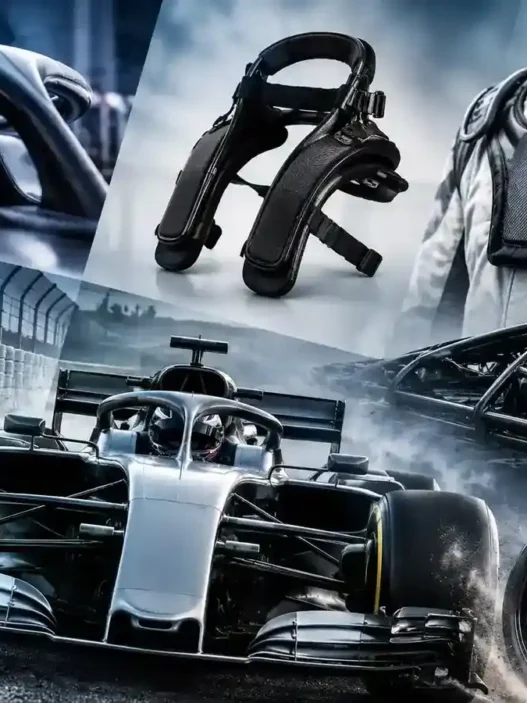
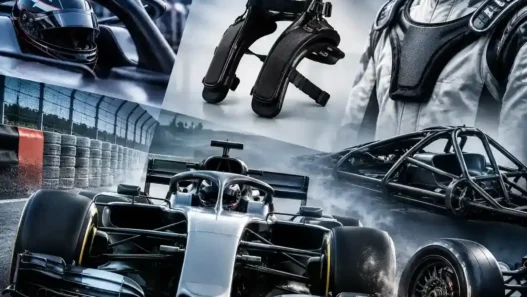
Safety technology has also become a defining part of NASCAR’s engineering story. SAFER barriers now line every track on the circuit, absorbing impact energy in a way that’s dramatically reduced serious injuries over the past two decades. The Next Gen chassis itself was built around a stronger central safety cage, developed using lessons learned from years of crash data collected across NASCAR’s national series.
IndyCar: Balancing Spec Racing With Emerging Hybrid Tech
IndyCar is the perfect hybrid of Formula 1’s team-developed technology and NASCAR’s fully spec platform. All the cars run a Dallara chassis, but engine development remains a battle between Honda and Chevrolet, which supply 2.2-liter twin-turbocharged V6 engines that can rev from 550 to 750 horsepower, depending on configuration.
The series added a real technological leap forward in 2024 with a hybrid energy recovery system and it’s one of the most unique features of IndyCar heading into 2026. The series also has a push-to-pass boost system that’s been around for a while, but now drivers can deploy extra power with a control right on the steering wheel, adding a real strategic layer to how and when they attack during a race.
What makes the engineering in IndyCar really tough is the variety of the tracks. The challenge for the engine and chassis is to be able to perform on high-speed ovals such as Indianapolis, tight temporary street circuits and permanent road courses all in one season. You have to set the cars up in a totally different way depending on the weekend. So, the versatility of engineering is very important to the teams and F1 and NASCAR don’t really ask for that as much as we do.
Aerodynamics: The Invisible Force Shaping Every Series
All three of these series involve aerodynamics, just in very different ways. Formula 1 makes the most of this, using downforce that can exceed the weight of the car itself at speed to create cornering grip well beyond what a motorcycle or even a NASCAR stock car can achieve. But that downforce carries a cost, producing the dirty, turbulent air that makes it so hard to follow another F1 car closely. That’s exactly why the smaller, narrower cars of 2026 were designed specifically to reduce that wake.
NASCAR’s stock car bodies are designed to produce much less downforce, which is part of the reason the racing is close and physical, not sensitive to aerodynamics. IndyCar falls somewhere in the middle, with underbody aero and adjustable wing elements that let teams tune the balance between straight-line speed and cornering grip depending on if they’re racing an oval or a road course that weekend.
Data, Simulation, and the Engineering Arms Race
Today all the major racing serieses are run on data in ways that would have been unimaginable a generation ago. Teams now have simulators that allow them to test setup changes, tire strategies and even full race scenarios before a car even turns a wheel at the actual track, dramatically reducing the cost and time it takes to develop new components.
Now, real-time telemetry is just as important during the actual race weekend. Engineers are always watching tire wear, fuel consumption, brake temperatures and dozens of other factors, feeding that information into strategy decisions that can determine a race as much as raw driving talent. This is especially so in Formula 1, where strategists on the pit wall crunch huge amounts of live data to make split-second decisions on pit stops and tire compounds. But NASCAR and IndyCar teams, too, are increasingly turning to similar tools, even in the context of more standardized machinery.
Why These Technical Differences Matter to Fans
Knowing the engineering of each series changes how you watch a race weekend. A Formula 1 qualifying lap is a demonstration of how a team has balanced downforce, energy deployment and tyre strategy against the specific demands of a single circuit. In NASCAR, the cars are much more evenly matched than in open-wheel racing, so a restart is a reminder of just how much drafting and drafting partners can mean. There is no better example of how varied the same chassis and engine package can be set up depending on the track type than an IndyCar road course weekend.
Fans who care about the business and betting side of these sports will also see why some teams or manufacturers have an advantage on some types of tracks or conditions. A team with a good aero package could have trouble on the more spec-oriented ovals in NASCAR, and a NASCAR organization built for drafting expertise wouldn’t automatically translate that advantage to the aerodynamically driven competition of Formula 1. Racing technology isn’t just an engineering story; it’s directly tied to which teams and drivers consistently perform well in specific conditions throughout a season.