



















































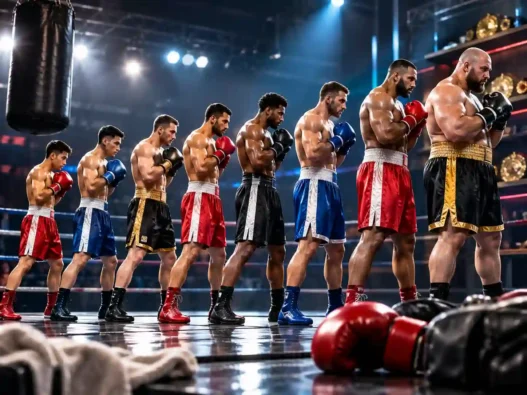
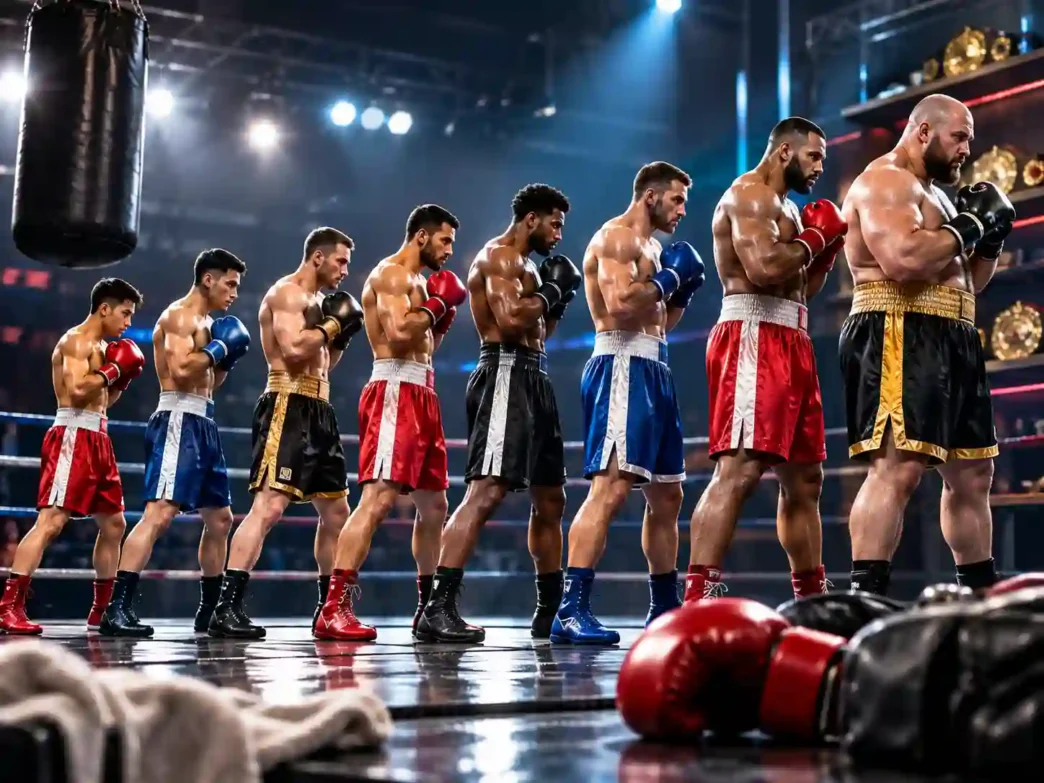
In boxing, weight classes are used to make fights more competitive and to remove the advantage that a large size difference can create. A 120 pound fighter isn’t going to be expected to regularly compete against someone who weighs 200 pounds. That’s why professional boxing has a series of divisions, from minimumweight and flyweight all the way up to heavyweight.
But for new fans, the quantity of divisions can be confusing. Boxing has more weight classes than most other major combat sports and the names of divisions can vary slightly depending on whether the discussion is about the men’s or women’s professional system or the sanctioning body.
Learning about boxing weight classes will help you understand rankings, championship bouts, and the careers of boxers moving up or down in weight.
Why does boxing have weight classes?
Weight can be a big factor in a boxing match. A heavier fighter will have the advantage of physical strength, punching power, reach and ability to take punishment.
The purpose of weight classes is to match fighters against other fighters of approximately the same size. That doesn’t take height, reach or natural strength out of the equation, but it does preclude the extremes.
The system also allows fighters to build careers within a specific division and, in the case of elite boxers, move up and down in weight to challenge for more titles.
How many boxing weight classes are there?
In professional boxing , there are traditionally 17 weight classes for men , from minimumweight to heavyweight . The exact limits and terminology may differ between sanctioning organizations, but these names are used universally in professional boxing. The commonly used divisions are
- Minimumweight
- Light flyweight
- Flyweight
- Super flyweight
- Bantamweight
- Super bantamweight
- Featherweight
- Super featherweight
- Lightweight
- Super lightweight
- Welterweight
- Super welterweight
- Middleweight
- Super middleweight
- Light heavyweight
- Cruiserweight
- Heavyweight
Minimum weight
The minimumweight division is the lightest of the major men’s professional boxing divisions. The standard limit is 105 pounds, so it’s a division where speed, movement, timing and technical precision can be a big factor. Minimumweight fighters are generally much smaller than the stars casual US boxing audiences see in the big pay-per-view fights but the division has produced world champions and tightly contested title fights.
Light flyweight
Light flyweight is for fighters weighing no more than 108 pounds. It lies directly above minimumweight and below flyweight. This weight is usually known for speed and volume. The fights tend to be fast combinations with a lot of movement. For boxers who begin their careers at the lower end of the sport, moving up from minimumweight to light flyweight can be an important step in their professional development.
Flyweight
Flyweight is set at 112 pounds. The division has a storied past in international boxing, with many champions who were technically skilled. Flyweight fighters can throw a lot of punches and move around quite a bit. The division is also a stepping stone for boxers on their way up the ladder toward the bantamweight and the heavier divisions.
Super flyweight
The super flyweight or junior bantamweight limit is 115 pounds. The division has become more meaningful in modern-day boxing as many of the sport’s best fighters have come through the division in their quest to bigger and better title opportunities. Take Naoya Inoue, for instance, who fought at super flyweight early in his career before working his way up and becoming one of the biggest names in the sport.
Bantamweight
Bantamweights are limited to 118 pounds. The division is between super flyweight and super bantamweight and has traditionally been a good mix of speed and punching power. Fighters in this range are often able to comfortably move between several nearby divisions, and the bantamweight division has become an important part of the championship landscape at the lower weights.
Super bantamweight
Super bantamweight (also known as junior featherweight) – limit: 122 pounds This division has attracted much attention in recent years, with the emergence of elite fighters such as Naoya Inoue. Super bantamweight is particularly significant because it’s a weight class where fighters can still maintain a good amount of speed but still have more power than they usually do at the lighter weights.
Featherweight
Featherweight is capped at 126 pounds. It is one of the historic divisions of boxing and has had many world champions and memorable title fights. Featherweights are generally able to combine speed with ever greater punching power to create a style of competition that appeals to both technical boxing fans and those looking for action.
Super featherweight
Super featherweight, also called junior lightweight, has a limit of 130 pounds. The division provides a bridge between featherweight and lightweight. At this weight, fighters generally carry more physical strength while maintaining a high level of speed. Several boxers have used the division as part of a progression toward lightweight and beyond.
Lightweight
The lightweight division, one of the most important in pro boxing, is limited to 135 pounds. The division has always been home to some of the biggest names in the sport and it’s often considered one of the deepest divisions when you have multiple elite fighters competing at the same time.
Super lightweight
The limit for super-lightweight, or junior welterweight, is 140 pounds. Sitting between lightweight and welterweight, the division has become an important stop for fighters who are too big to stay at 135 pounds but don’t naturally fall into the traditional welterweight range. It’s also a division that can be attractive to boxers who want to test themselves against bigger fighters without going straight to 147 pounds.
Welterweight
Boxing’s 147-pound welterweight division is one of the most commercially vital in the sport. Some of the biggest names in the sport have fought at welterweight, including Sugar Ray Leonard, Floyd Mayweather Jr. and Manny Pacquiao. There is a nice mix of speed, punching power and size in the division. It’s also historically drawn major championship bouts because of the number of elite fighters it’s played host to.
Super welterweight
The super welterweight or junior middleweight is capped at 154 pounds. Another step up between welterweight and middleweight. “It’s a division for fighters who have outgrown 147 pounds, but can still maintain much of the speed of welterweight. The additional weight can also lead to increased physical strength and punching power.
Middleweight
Middleweight limit is 160 pounds. It is one of the most renowned divisions in boxing history and has seen legendary champions such as Sugar Ray Robinson, Marvin Hagler, Bernard Hopkins and Gennady Golovkin. The division is often seen as a sweet spot where speed, technique and power are counterbalanced by significant physical strength. The middleweight championship bouts have been among the most significant fights in boxing history.
Super middleweight
Super middleweight limit: 168 pounds. The division was created to add another weight class between middleweight and light heavyweight. It’s become one of boxing’s major championship divisions with fighters being able to fight at a heavier weight without immediately jumping into the 175-pound light heavyweight division. One of the biggest modern names associated with the division was Saul “Canelo” Alvarez.
Light heavyweight
Light heavyweight is 175 pounds.” The fighters at this point are much bigger than a middleweight but generally still have a fair amount of mobility. Light heavyweight has produced champions like Archie Moore, Bob Foster, Roy Jones Jr. and Dmitry Bivol. The division is also important as it can serve as a bridge between the middleweight classes and the cruiserweight.
Cruiserweight
The widely adopted professional standard has a 200-pound limit for cruiserweight. This division was created to fill a category between light heavyweight and heavyweight, where the size difference can get pretty big. Cruiserweights are usually much larger than light heavyweights but smaller than many natural heavyweights. The division has also turned out fighters who went on to success at heavyweight. Oleksandr Usyk is one of the best examples, capturing the undisputed cruiserweight title before moving up and eventually dominating the heavyweight division.
Heavyweight
Heavyweight is the premier professional division in boxing. Unlike most other divisions, the heavyweight division has no maximum upper weight limit in the traditional professional structure. Fighters just need to make the limit for cruiserweight.
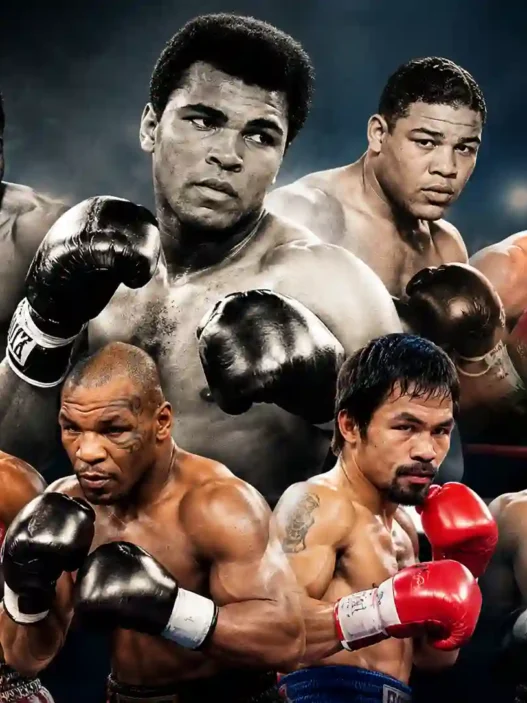
That means there can be huge size differences in heavyweight boxing. Some heavyweights weigh just over 200 pounds, while others are much heavier. This division has produced the sport’s biggest stars like Muhammad Ali, Joe Louis, Mike Tyson, Lennox Lewis and many others.
There is no upper limit to the weight so fights involving heavyweights can produce some of the greatest differences in height, reach and weight of body that are seen in professional boxing.
Why is heavyweight boxing different?
The heavyweight division of boxing holds a special place as there is no upper weight limit. A heavyweight can be 205 pounds and still be in the same division as someone over 250 pounds. This is what differentiates size management from all other major pro divisions.
Power is obviously important but heavyweight boxing is not simply about whose punch is bigger. Footwork, timing, conditioning, defense, ring intelligence are still important. That’s part of why the division is still unpredictable. A smaller heavyweight with better movement and technique can beat a much larger opponent.
What is the difference between weight and weight class?
The boxers actual weight is the scale reading at the official weigh-in. A weight class is a range or limits within which the fighter must fight in a certain fight. For example, in a 147-pound welterweight fight, a fighter must weigh 147 pounds or less. Fighter’s weight after rehydration can be higher at the time of the fight. The distinction is particularly important when fighters change divisions.
How do boxing weigh-ins work?
Professional fighters typically weigh in prior to the fight, typically the day before the bout. The official weigh-in is the final test to see if each boxer is at the contractual weight limit.
There are consequences when a fighter misses weight. The opponent can agree to continue with special conditions, the fighter can be financially penalized or the bout can be potentially canceled. Missing weight for a championship fight can have other consequences as well, in terms of the title itself.
What happens after the weigh-in?
Boxers also can put weight back on after the official weigh in before stepping into the ring. This means that the weight listed for a fighter’s division doesn’t necessarily mean that is the weight the boxer actually fights at.
Some fighters are naturally close to the top end of their division, and some cut a lot of weight before weigh-in. So the ability to lose weight safely can be an important part of a professional boxer’s career.
Why do boxers move between divisions?
There are many reasons that elite boxers move between weight classes. And as a fighter gets older he may naturally get bigger and find it harder and harder to make the old limit. Others may move up because of big championship opportunities in another division.
Some fighters switch divisions as a way to challenge themselves against new opponents or as an attempt to become champions in multiple weight classes. One of the big milestones in boxing is a couple of world titles in different divisions.
What is a multi-division champion?
A multi-division champion is a boxer who has won recognized world titles in more than one weight class. Moving up successfully is difficult because the opponents become larger and often stronger. Fighters such as Manny Pacquiao, Canelo Alvarez and Oleksandr Usyk have built major parts of their legacies by winning championships across multiple divisions.
What are the four major championship organizations?
The four organizations most commonly associated with major men’s world titles are:
- WBA — World Boxing Association
- WBC — World Boxing Council
- IBF — International Boxing Federation
- WBO — World Boxing Organization
Each organization has its own rankings and championship structure. That means there can be multiple recognized world champions in a single weight class.
What is an undisputed champion?
The undisputed champion is usually the fighter who holds all four major world championship belts, WBA, WBC, IBF and WBO, in the same division. It’s particularly hard to become undisputed because the fighter has to deal with a number of sanctioning bodies, mandatory challengers and contract negotiations. It is therefore one of the greatest accomplishments obtainable to a modern professional pugilist.
What is a unified champion?
Unified champion: A boxer who holds at least two major world titles in the same division. For example, a fighter who is in possession of both the WBC and the WBO belts at the same time is a unified champion. A unified champion does not automatically have all the major belts. Usually the term ‘undisputed’ is reserved for a fighter who holds all four major titles.
Want to learn more about fighters, championship bouts and betting markets? Explore the latest boxing guides and Sportsbook coverage on Sports Arcane