






















































“Sports betting has become more and more technology-led as operators use sophisticated data feeds and automation to create a seamless wagering experience. At the heart of this ecosystem are APIs for betting, the engine behind everything from displaying odds and building markets to live betting and settlement.
Sportsbook operators need to know all the markets that are offered through betting APIs. The availability of markets in terms of both extent and quality may have a direct impact on customer engagement, betting volume and competitive positioning.
In this guide we will look at the most common betting API markets, how they work and what should operators consider when looking at a sports betting API provider.
What are betting API markets?
Betting API markets are betting options provided through a sports betting API that enable sportsbooks to provide betting opportunities on sporting events. Operators avoid the manual creation and updating of markets and instead rely on feeds that automate and deliver real-time odds, event info and settlement data.
A modern betting data API can provide thousands of betting markets for multiple sports, leagues and competitions worldwide.
These markets often include traditional bets like moneylines and spreads, as well as more advanced options like player props, live betting opportunities, and same-game parlays.
Why sportsbook API integration matters
Effective sportsbook API integration is now a necessity for operators looking to compete in regulated betting markets. What customers want from sportsbooks is real-time odds updates, broad market coverage, fast settlement, reliable live betting experiences, and accurate player and team data. A robust sports betting API enables operators to automate these processes while reducing operational complexity and improving scalability. For new sportsbooks, API integration can significantly reduce time-to-market. For established operators, it provides access to additional sports, leagues, and specialized betting products.
Core betting markets available through APIs
Moneyline markets
Betting on the moneyline is still one of the most popular types of betting out there. In a moneyline market, bettors pick the team they believe will win the event. Examples are: Winners of NF, MLB, NBA and Tennis games. Most betting API markets have moneyline markets available to bet pre-match and live.
Point spread markets
Point spread betting levels the playing field by assigning a handicap to one side. For example:
- Chiefs -6.5
- Raiders +6.5
The favorite needs to win by more than the assigned spread . The underdog can either lose by less , or win outright . Spread markets are one of the most popular odds API markets in North America.
Totals (Over/Under) markets
Totals betting focuses on the combined score of both competitors.
Examples include:
- Over 47.5 points
- Under 47.5 points
These markets are available across virtually every major sport and represent a key offering for sportsbook operators.
Draw No Bet markets
Draw No Bet markets are very popular in soccer and eliminate the possibility of a draw as a result. If the match ends in a draw, bets are returned. This market is appealing to the bettors who want to limit their risk but still receive good value.
Advanced betting API markets
Player proposition markets:
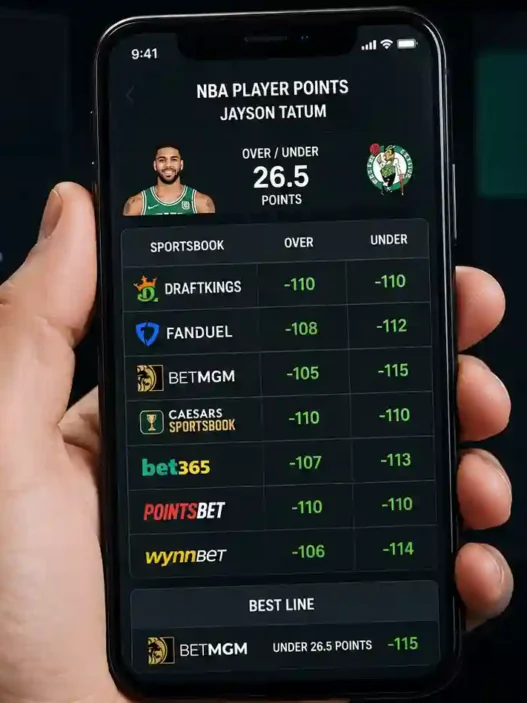
In recent years, player props have grown exponentially. These markets are based on player performance, and not the result of the games. Examples are: Passing yards, Strikeouts, Home runs, Rebounds, Assists, and Touchdowns. Because of strong engagement and more frequent betting, many operators are focusing on player props.
Team proposition markets
Team props are based on team specific performance metrics Examples: Team total points, Total touchdowns, Total goals, Total hits and Total corners. A good betting data API will feature hundreds of team proposition markets for major events.
Futures markets
Futures give bettors the chance to bet on outcomes that will be decided at a later date in a season or tournament. Examples: Super Bowl winner, World Series winner, NBA Finals winner, MVP awards, League champion. Futures markets keep the sportsbooks in the game year-round.
Live betting markets
In-play wagering
Live betting is one of the fastest growing sectors of online sports betting. Sportsbook API integration enables operators to provide up-to-date odds during live games. Popular live markets are: Next team to score, Current quarter winner, Total points live, Match winner live and Race to a specific score.
Micro-betting markets
Micro-betting is focused on events within a game that occur over a short period of time and include: Result of the next play, Next pitch outcome, Next possession result, Next point winner in tennis. These markets need low-latency sports betting API infrastructure capable of delivering real-time updates.
Same-game parlays and combination markets
Same-game parlays have transformed the betting experience, allowing bettors to select multiple options in a single event. For example: Team to win, Quarterback to throw 2 TDs, Game total over 48.5 points. Modern odds API markets are increasingly offering automated same-game parlay pricing, which can help operators deliver highly customized betting experiences.
Esports betting markets
Esports is pulling in new audiences across the globe. The most common esports betting API markets are: Match winner Map winner First objective achieved Total kills Tournament winner Today’s top API providers are now offering major esports titles, along with traditional sports.
Specialty betting markets
Betting APIs support many niche and specialty markets beyond mainstream sports. Examples : Awards betting Entertainment betting Political prediction markets ( where allowed ) Combat sports props Racing markets . Availability of such offerings can be a differentiator for sportsbooks in competitive markets.
Key features to look for in a betting data API
Not all API providers are created equal in coverage or reliability. When selecting a betting data API, sportsbook operators should consider:
Coverage of the market
More betting API markets means operators can target different betting audiences.
Update rate
Odds updates should be low latency especially for live betting.
Data integrity
Odds or settlement errors can undermine customer trust and drive up operational costs.
Scalability
The API should be able to handle traffic spikes during major sporting events.
Settlement automation
Automated grading and settlement reduces manual work and increases efficiency.
Documentation and support
Detailed technical documentation can make a world of difference in sportsbook API integration projects.
The future of betting API markets
With the evolution of sports betting technology, API providers are moving beyond the traditional betting options. Artificial intelligence, real-time analytics, player tracking data and predictive modeling will see entire new market categories emerge in the coming years.
Advanced sports betting API solutions will enable operators to deliver tailored experiences, support new betting trends and stay competitive in an increasingly crowded marketplace.
Conclusion
Betting API markets are the backbone of today’s sportsbook operations. From moneylines and spreads to player props, live betting and same game parlays, today’s APIs give operators access to thousands of wagering opportunities on global sporting events.
Selecting the appropriate sports betting API and integrating a successful sportsbook API can enable operators to increase market coverage, boost user engagement, and create a more dynamic betting experience. As the industry keeps evolving, access to reliable odds API markets and a solid betting data API will continue to be a vital component of sportsbook success.