




















































The 2026 FIFA World Cup will be the biggest ever with 48 teams playing in North America. For fans, travelers and sports fans alike, the tournament is not just about the matches, but about planning. Knowing the venues, staying up to date on the teams, and getting an idea of the ticket prices will be key to getting the most out of the experience.
This complete guide will give you all the information you need on the tournament, including host cities and stadiums, the teams, the match format, and expected ticket prices.
FIFA World Cup 2026 Overview
The tournament is being held in three countries, the first World Cup to span such a vast geographical area. The expanded format has 48 teams instead of the traditional 32, increasing the total number of matches and giving more countries the chance to play. More group stage matches, a new knockout structure and a longer tournament window will mean more football for fans than they have ever had before.
FIFA World Cup 2026 key venues
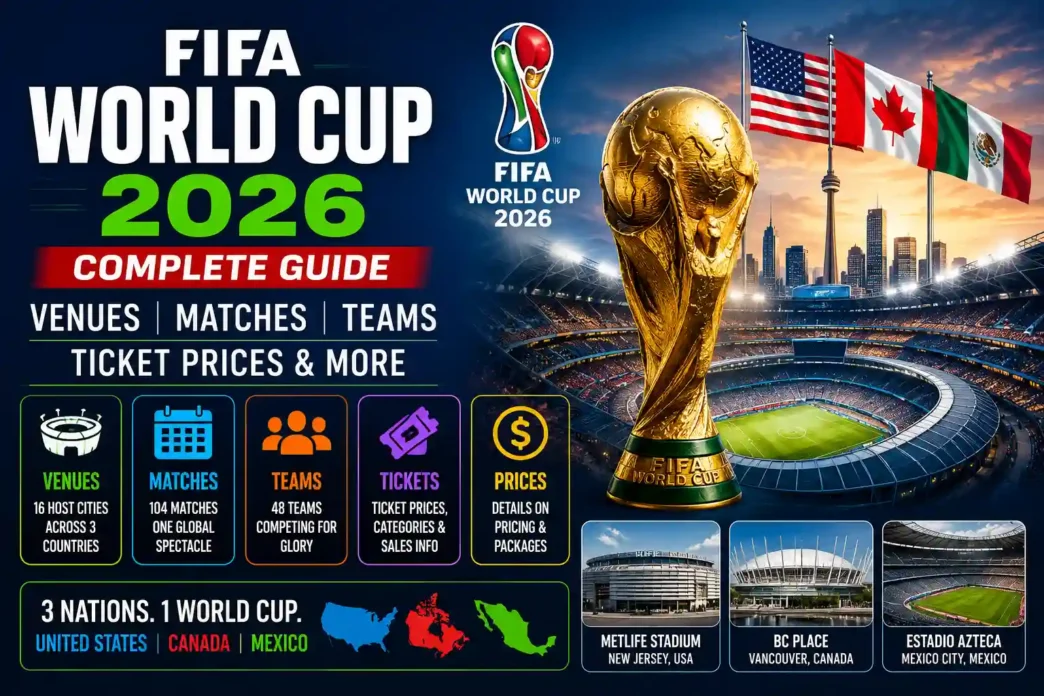
The World Cup 2026 will be played across 16 cities in total across the United States, Canada and Mexico. Every country has its own sporting culture, infrastructure and stadium legacy.
FIFA World Cup venues in the United States
Most of the matches will be held in the US, in some of the biggest stadiums ready for NFL and soccer. The stadiums are known for their huge capacities and modern facilities, making them ideal for high-profile World Cup matches.
- New York / New Jersey (MetLife Stadium)
- Los Angeles (SoFi Stadium)
- Dallas (AT&T Stadium)
- Miami (Hard Rock Stadium)
- Atlanta (Mercedes-Benz Stadium)
- Seattle (Lumen Field)
Canada venues
Canada will host matches in: Toronto (BMO Field), Vancouver (BC Place).
Mexico venues
Mexico, one of football’s most passionate nations, will host matches in iconic stadiums such as: Mexico City (Estadio Azteca); Guadalajara (Estadio Akron); Monterrey (Estadio BBVA). Estadio Azteca will make history as the first stadium to host World Cup matches in three different editions.
FIFA world cup 2026 tournament format and match structure
The expanded format is 48 teams in 12 groups of four. The best teams and some of the third-placed teams will qualify for a new knockout round of 32 teams. The format will involve a massive increase in the total number of matches meaning fans will have more opportunities to watch live football in different cities and at different stages of the tournament.
FIFA World Cup ticket prices and availability
The cost of tickets for the 2026 FIFA World Cup is one of the most discussed topics of the tournament, especially with matches already being played in the United States, Canada and Mexico. Early reports from venues indicate strong demand in some cities, but also clear empty seats in others, mainly due to wide pricing gaps between affordable and premium categories. Here’s a simple breakdown of how ticket pricing works at this moment in time, during the tournament.
FIFA World Cup 2026 Ticket Pricing:
Across the tournament, FIFA has used a tiered pricing model that changes by match stage, stadium, and seat category. Ranges during the tournament include:
- Lowest entry-level tickets: around $60 (Supporter Entry Tier in selected allocations)
- Typical group-stage range: $120 – $620 depending on city and category
- High-demand matches (host nations, big teams): $700 – $2,500+
- Knockout matches: $1,000 – $5,000+
- Final match tickets: roughly $2,000 to over $10,000+ depending on category
In premium resale markets, some final tickets have been reported far higher, reaching extreme premium valuations.
Travel and logistics for fans
International travelers will have to make plans, as matches will be in various North American locations. The main air routes are between the US cities. Canada and Mexico have more options for regional travel . In view of the expected global demand for tickets and accommodation, careful planning will be necessary. Fans going to multiple matches may have to coordinate.
- Flights between host cities (domestic)
- Accommodation in Popular Urban Centres
- Visa and entry requirements by nationality
- Local transport near stadiums
Economic and cultural effects
Economically, all three host countries are expected to benefit from the tournament. The largest gains are expected in the tourism, hospitality, transportation and retail sectors. The event will not only help the economy, but also the sport of football in North America, especially in the United States, where the sport is rapidly growing at the youth and professional level.
The FIFA World Cup 2026 will be the largest and most commercially significant edition of the tournament in its history. It will be a global celebration of football on a scale never seen before with 48 teams, 16 host cities and three host nations.
From the legendary Estadio Azteca to the modern stadiums of the United States and Canada, the tournament promises a wide range of experiences for fans around the world. Any person who is interested to attend this historic event will need to know the venues, match structure, teams and ticket costs.