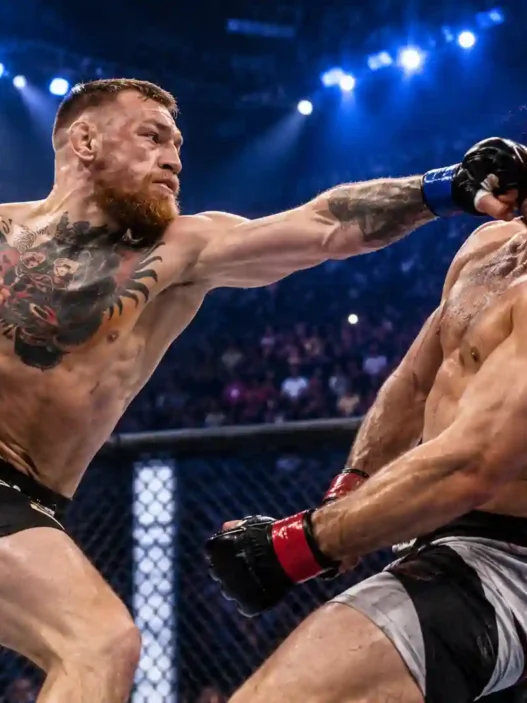

















































MMA betting has become a major part of the combat sports experience, with fans looking beyond simply picking a winner before a fight. A typical MMA card can offer you a variety of betting options, such as the moneyline, method of victory, round totals, and other props. Understanding what each market means is important before putting money on a fight, particularly because MMA can change quickly with one takedown, submission attempt, or clean strike.
For beginners the betting screen may look complicated at first. How a fight is priced involves MMA odds, fighter stats, weight changes, recent form and matchup styles. This guide covers the main MMA betting markets, how to read the odds and what factors can help when trying to pick winners in the year to come.
How MMA betting works
The basic idea behind MMA betting is straightforward: choose a market, select an outcome and place a wager at the available odds. The most common market is the moneyline, where bettors select which fighter they believe will win. The odds on each fighter reflect the sportsbook’s view of the matchup and dictate how much you could potentially win.
If a fighter has negative American odds, he is the favourite. If a fighter has positive odds, he is the underdog. For example, odds of -150 mean a bettor would have to bet $150 to make $100 profit. Whereas +150 would earn $150 profit on a $100 wager if the selection wins.
The numbers are not a prediction of a fighter winning for certain. They reflect how the sportsbook prices the matchup and have a margin built in so the operator can make money on the long run.
Understanding MMA odds
American odds are particularly popular with US sportsbooks. Favorites are marked with a minus sign and underdogs with a plus sign, so it’s pretty easy to tell which fighter is expected to have the better shot.
Suppose Fighter A is listed at -200 and Fighter B at +170. Fighter A is the favorite, but that doesn’t mean the sportsbook is guaranteeing a win. Fighter B has a lower chance of winning, but a higher potential payout, since the market assigns a lower probability to that outcome.
Also, bettors should understand that odds move. A sportsbook can move its line before a fight even starts based on new information about an injury, weight cut, change of opponent or public betting activity.
The most popular MMA betting markets
Moneyline
The money line is the simplest place to start. You are betting on which fighter will win the fight, whether the victory comes by knockout, submission or decision. This is generally a simpler market for newcomers to grasp, but seasoned punters will often look beyond the headline favourite to see whether the price truly reflects the contest.
Method of victory
You can also bet on the method of victory, predicting how the fight will end. Common options are knockout or technical knockout, submission and decision. This market can pay out more than the moneyline, but does require greater knowledge of each fighter. A striker may be more attractive in a knockout market against a weak defensive wrestler, while a high-level grappler against an opponent with poor submission defense could make a submission prop interesting.
Over and under rounds
Round totals are more about how long the fight lasts than who wins. A sportsbook may offer a line for a certain number of rounds, where bettors can pick whether the fight will go over or under that number.
These bets can be valuable when a matchup has a distinct pace or style pattern. Two aggressive strikers with poor defense habits might present a different betting opportunity than two defensive grapplers who are comfortable fighting at a slower pace.
Round betting
Round betting is the prediction of the exact round the fight will end. Generally, it’s a riskier bet than a straight moneyline because a lot has to go right for it to pay off.
Distance and decision props
Some sportsbooks will allow you to wager on whether a fight ends in a decision or not. Markets that can be helpful when evaluating fighters with good durability or a history of finishing opponents.
How to make better MMA fight predictions
There’s no surefire formula to pick an MMA winner. The sport is difficult to predict, particularly because fighters can win in a variety of ways and a single mistake can change a bout completely. Still, there are a number of factors that can be useful context in making fight predictions.
Study fighting styles
Style is one of the biggest factors in MMA. Sometimes a guy’s overall record doesn’t tell the whole story if his strengths and weaknesses match up poorly against his opponent. A good striker may have problems with a strong wrestler that can take him down, and a great submission specialist can find openings against an opponent that gives up dominant positions. Likewise, a good defensive wrestler can force a grappling-heavy opponent into a striking match. The answer is not just a matter of whose record is better, but how the two styles interact.
Look at recent form
Results from a few years ago are often less useful than a fighter’s recent record. Performance can be affected by age, injuries, changes in training camps and accumulated damage. A fighter with a great career record, a veteran, is not necessarily the same fighter who racked up those wins earlier. In contrast, a younger athlete may have improved significantly since an early career loss.
Consider strength of opposition
If the opposition is not as strong, then the record is not a reliable guide. A fighter with a long winning streak against lower-ranked competition might find themselves facing a very different challenge when they step into the Octagon against a ranked contender.
When considering MMA betting opportunities, you want to see who the fighters have beaten, how those fights went and if they have done well against similar styles of opponents.
Examine striking and grappling statistics
Figures can give more context. Significant strikes, striking accuracy, takedown attempts, takedown defense and submission attempts can reveal patterns that the win-loss record doesn’t always show.
Statistics, however, are to be considered as part of the analysis and not as a separate prediction tool. For example, a fighter might have good takedown numbers against opponents who rarely wrestle, but those numbers may not tell you much about how they will fare against an elite wrestler.
Pay attention to weight cuts
MMA Weight Management can be a major factor. Sometimes fighters have to fight after grueling weight cuts and missing weight can change the stakes of a fight too.
Bettors should watch official weigh-ins and credible reports on fighter health, not speculation. Changes in weight class can also have a large impact on how a fighter’s physical advantages play out in the matchup.
Consider age and activity
Not all fighters are affected by age the same, but it can become an issue when paired with injuries, long layoffs or a demanding history of competition. Recent activity can also be important. One athlete may need time to get back in the timing and fight rhythm after a long layoff from the ring while another may thrive on consistent competition.
What makes a good betting tip?
A good betting tip should be based on a clear reason and not just the name of a fighter who looks like winning. Before placing a bet, consider whether the odds are a fair reflection of the perceived advantage.
Say you believe a favorite has a 70% chance of winning, but the price offered implies a much higher probability, the bet might be poor value even if the fighter wins in the end. So betting is more than simply predicting outcomes , it is about assessing the relationship between probability and price .
This is especially true for betting on combat sports where popular fighters can generate a lot of public interest and sometimes are heavily priced favorites.
Common MMA betting mistakes
One of the biggest blunders is to bet solely on reputation. A top fighter might be a better fighter overall but still bad value if the odds are extremely short. Another mistake is not paying attention to the matchup itself. You can’t find out everything you want to know about how a fighter’s skills will match up against a certain opponent from his past record.
Loss chasing is another common problem. If you increase the size of a wager just because a prior bet didn’t work out, a single loss can become a much bigger financial loss. Decisions are easier to make and more consistent with a fixed betting budget and pre-decided stake size.
Finally, punters should never use predictions from social media, as well as fan confidence or hype, to replace research. While MMA has a large entertainment component, betting decisions are better served by evidence and disciplined analysis.
Should you bet on favorites or underdogs?
Neither approach is a priori superior. Favorites tend to win more often but have lower odds. Underdogs tend to win less often but have higher odds. But the important question is: does the available price represent fair value based on your assessment of the matchup? You can have a favorite fighter and still have a bad bet because the odds are too short. That’s why experienced bettors don’t just try to pick winners, they focus on price.
Live MMA betting
You can also place bets live after the fight has started as the odds change with the action. A fighter who gets knocked down early could suddenly become a much bigger underdog, while a strong first round can cause a fighter’s price to shorten.
Live MMA betting is more risky as fights can end abruptly. One submission or clean strike can make an in-play wager moot in seconds.
It’s important for bettors to understand the sport and have a clear reason to enter a live market rather than react emotionally to every change in odds.