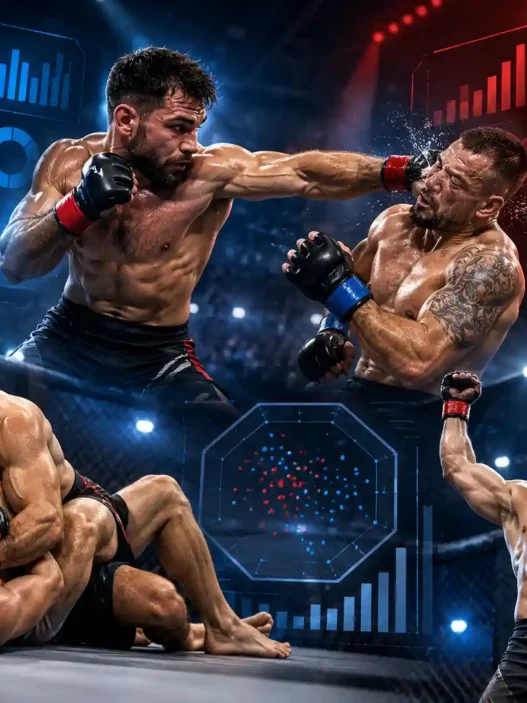








































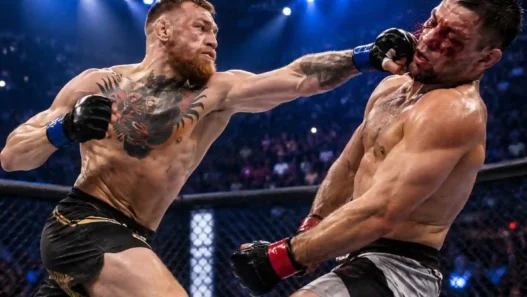
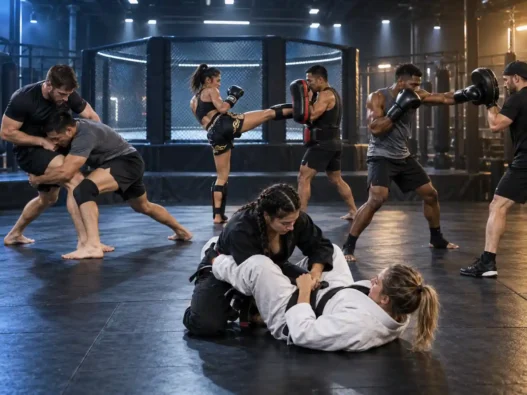
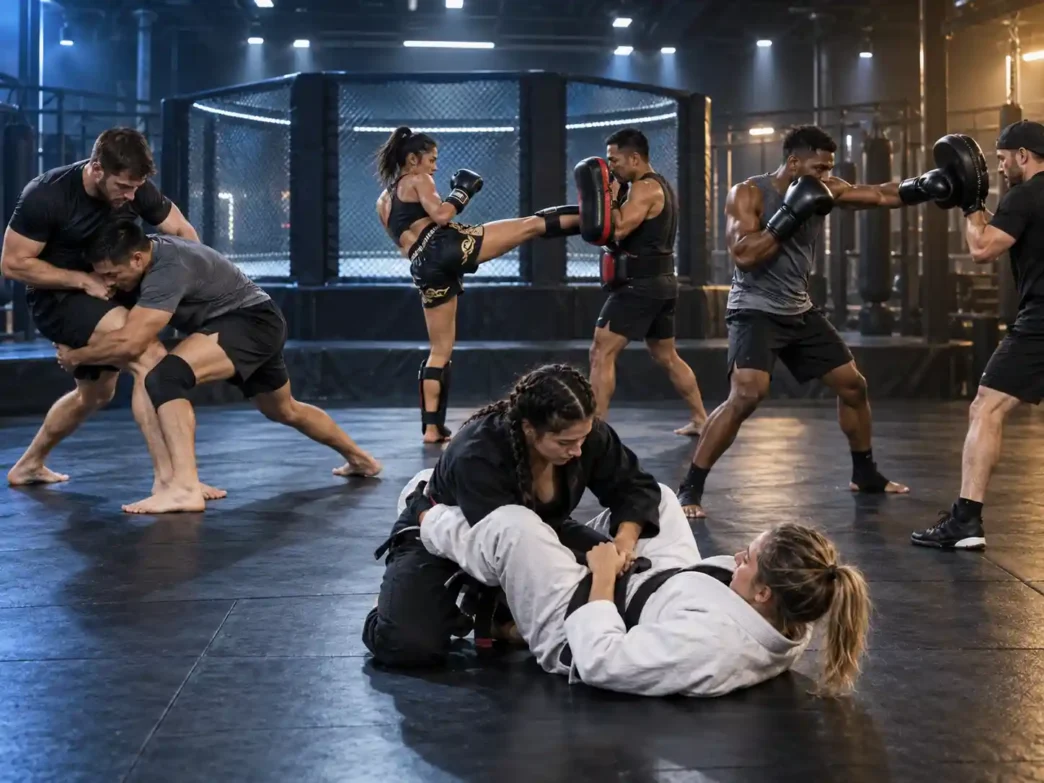
Mixed martial arts is commonly called a sport of different fighting disciplines meeting together. However, modern MMA is more complex than just a combination of some martial arts. Fighters learn how to strike, defend takedowns, control on the ground and escape dangerous positions. Most of the top players have a well-rounded game, but still have a discipline or two as their biggest strength.
Knowing the main MMA styles makes it easier to follow what is going on in a fight. A wrestler may want to take the fight to the mat, a Brazilian Jiu-Jitsu specialist may want to find a submission and a Muay Thai or boxing expert may want to keep the fight standing. These methods can be in interesting conflict with each other , and style matchups are one of the most important aspects of MMA .
What are MMA fighting styles?
Unlike a traditional combat sport, MMA is a mix of techniques from several combat sports. Fighters can use punches, kicks, takedowns, throws, clinch work and submissions provided the techniques used are allowed by the rules of the organization.
Most pro fighters cross train in several disciplines. A wrestler can become a good boxer. A Brazilian Jiu-Jitsu practitioner can spend years developing his takedown defense and striking. Few elite fighters are as neatly categorized as a consequence.
But understanding the foundations of each discipline provides a useful way to analyze how fighters approach competition.
Wrestling
Wrestling is one of the most dominant bases in MMA. The biggest plus is finding out if a fight stays on the feet or hits the mat.
A good wrestler can take an opponent to the mat with takedowns and keep him there, controlling the pace of a fight. Even if a takedown doesn’t earn a finish, it drains an opponent’s energy and reduces their striking ability by forcing them to defend against multiple takedown attempts.
Wrestlers also have good balance, body control and physical conditioning, all of which are helpful in MMA.
Why wrestling matters in MMA
In wrestling control is one of the biggest advantages. If a fighter can consistently dictate where the exchanges occur, he can force a guy to fight outside of his natural style.
A good striker may bring down a dangerous wrestler instead of trading punches at range. The wrestler may choose to work on top against a submission specialist and not put himself in danger.
Modern MMA has also shown that wrestling is not simply about takedowns. The modern wrestling-based game includes cage control, clinch work, takedown defense and the ability to get an opponent back to the mat.
Brazilian Jiu-Jitsu
Brazilian Jiu-Jitsu, or BJJ, has played a major role in modernizing MMA. The discipline stresses leverage, positional control and submissions, enabling a technically skilled fighter to threaten an opponent from the ground.
Generally, BJJ practitioners work on positions such as the guard, mount, side control and back control. From here they can attack submissions such as rear-naked chokes, armbars, triangles.
How BJJ works in MMA
A BJJ specialist doesn’t have to be winning every minute of the fight. One mistake by an opponent can open the door for a submission. But modern MMA has changed the way BJJ is applied. “When you’re fighting, you need to know how to defend strikes. You cannot give your opponent an opportunity to get away. They also need to have enough wrestling skills to know when and where the fight goes to the mat.
So the best modern grapplers blend traditional BJJ techniques with wrestling, positional awareness and ground-and-pound defense.
Muay Thai
Muay Thai is known as the “art of eight limbs” because it employs punches, kicks, elbows and knees. This is particularly useful in MMA due to its emphasis on close range striking and clinch fighting .
Muay Thai fighters are trained to hit from different distances and use several weapons in combination. Leg kicks can sap an opponent’s mobility. Knees and elbows are dangerous at close range.
Why Muay Thai is effective in MMA
The clinch is one of those areas where Muay Thai is able to be particularly useful. Positioning, knees and short strikes can be used to control an opponent against the cage.
Adapting traditional Muay Thai for MMA does require some adjustments though. If a fighter stands too upright, or relies on certain kicks too much, they can leave themselves open to takedowns. MMA fighters change their stance, movement and striking techniques to incorporate the threat of wrestling.
Boxing
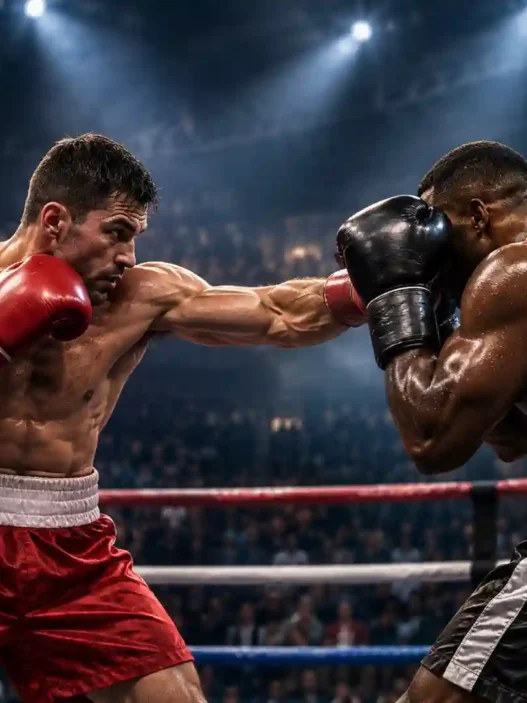
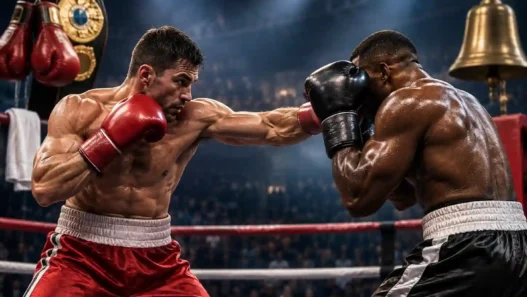
Another major foundation of MMA striking is boxing. Boxing rules don’t allow kicks or takedowns but the focus on punch accuracy, head movement, footwork and distance control can transfer well into the Octagon.
Boxers learn to create openings with combinations, feints and changes of pace. They also learn to move in and out of range without wasting energy.
How boxing changes in MMA
MMA fighters cannot apply boxing techniques in the exact way that a boxer would in a boxing ring. The threat of kicks, takedowns and submissions changes the way they stand and move.
For example, a very low boxing stance can leave a fighter open to kicks, while too much head movement can open the fighter up for knees to be thrown. So MMA boxing should have a defensive awareness of multiple attack types.
The best MMA boxers typically blend their striking skills with powerful takedown defense and kicking.
Kickboxing and other striking styles
Most of the spotlight goes to wrestling, BJJ, Muay Thai and boxing, but they are not the only disciplines influencing MMA.
Kickboxing gives fighters a combo of punches and kicks. Karate can add weird movement patterns, distance control and explosive attacks. The sport has also been influenced by the different kicking techniques of taekwondo .
Modern fighters often take useful elements from several disciplines rather than training exclusively in one system.
How styles interact inside the Octagon
The real thrill is when different MMA styles clash. A striker might want to keep the distance and land combinations, while a wrestler might spend the whole fight trying to close that distance and get a takedown. A BJJ specialist may love the opportunity to fight on the ground, while a powerful striker may try to get back on his feet as quickly as possible.
This is a constant battle of tactics. Fighters are not only using their own techniques, they are trying to prevent their opponents from using their most powerful weapons.
Striker vs wrestler
This is one of the more recognizable pairings in the MMA. The striker wants space, the wrestler wants to close the distance. To be a successful striker you need good takedown defense, footwork and you need to be able to punish failed entries. The wrestler has to find ways to get in safely, without taking damaging punches and knees.
The fight often comes down to whether the wrestler can get the fight to the ground or whether the striker can keep the fight at a distance long enough for the game to work.
Wrestler vs BJJ specialist
This is a matchup that can yield a very interesting battle for positional control. The wrestler may have the edge in terms of takedowns and top pressure, but the BJJ guy might be more dangerous from certain bottom positions. A good grappler can take an opponent’s aggression and turn it into a submission opportunity.
The wrestler therefore has to be disciplined and not let go of the neck, arms or back whilst maintaining effective control.
Striker vs BJJ specialist
The question here is usually if the BJJ fighter can take the fight to the mats. The striker generally likes to keep the fight standing and use his speed, distance and combinations. The grappler must close the distance, get a takedown or capitalize on a mistake by the striker.
Having a solid takedown defense can change the dynamic of the matchup tremendously, as it forces the grappler to expend more energy to get to their preferred position.
Why modern MMA fighters need multiple styles
At the top, the days of a fighter relying heavily on one discipline are pretty much over. A wrestler needs striking skills to get into the pocket safely. A BJJ specialist needs wrestling to control where grappling exchanges take place. A striker has to have takedown defense and some ground skills to live if someone gets him on the ground.
Because of this, you’ll often see modern MMA gyms combine wrestling, BJJ, boxing, Muay Thai, kickboxing, and strength and conditioning into one training program.
What makes a complete MMA fighter?
A complete fighter doesn’t have to be the best specialist in every discipline. Instead, they need to have enough ability in different areas so that obvious weaknesses cannot be exploited by opponents.
And good fight IQ is just as important. Technical ability may be important, but knowing when to attack, when to conserve energy and when to change tactics can be just as crucial.
Elite fighters also adjust during fights. If a preferred strategy fails, switching from striking to wrestling or from aggressive grappling to defensive control can be crucial.
How fighting styles affect MMA predictions
Fans may also use an understanding of styles to break down matchups. A fighter’s record doesn’t always indicate how they will perform against a certain opponent.
If you are a skilled striker fighting a poor wrestler you may not be able to use your best weapons very often. Likewise, a dominant wrestler could find himself in trouble against someone with good takedown defense and dangerous counterstriking.
That’s why matchup analysis is often more about how two skill sets interact than it is about just comparing rankings.