


















































Ice hockey is one of the fastest of the major team sports. Players skate at speeds of more than 20 miles per hour and a puck on a hard shot travels at well over 90 miles per hour between them. That can make the sport seem intimidating to a newcomer, but the basic structure, positions, and scoring system are actually pretty simple once broken down properly.
This guide will take you thru the basics every hockey fan should know, and use real-world examples from this year’s truly historic hockey calendar, which saw a dramatic Olympic gold medal run and a long-overdue Stanley Cup championship.
The Basic Rules of Ice Hockey
NHL hockey is played on a sheet of ice about 200 feet long and 85 feet wide, with two teams of six skaters each—five position players plus a goaltender—trying to shoot a rubber puck in the net of the other team. In the regular season, if the score is tied at the end of regulation, teams will play a five-minute sudden-death overtime period, followed by a shootout if necessary. In the playoffs, games will continue with complete sudden-death overtime periods until someone scores, sometimes going deep into multiple overtime periods.
There are two rules that are most confusing to newcomers. Offside is when an attacking player enters the opposing team ’ s blue line before the puck does . Icing is when a team shoots the puck from behind the center red line all the way down the ice with it not being touched , which results in a stoppage and a faceoff in the offending team ’ s own defensive zone . You want the play to be really competitive in a hockey game . You don’t want a team just camping out near the other team’s goal or just clearing the puck out without any consequence . That’s why both rules are in place .
Understanding Penalties and Power Plays
Basically if a player breaks a rule ( like tripping , hooking , or more serious stuff like boarding or fighting ) they get sent to the penalty box for a certain amount of time . Minor penalty is usually 2 minutes , major penalty is usually 5 minutes . When a player is penalized their team is shorthanded and the other team is on a power play . Power plays are a big deal because the scoring rates change drastically when one team has an extra skater on the ice .
In more serious cases, it can be a game misconduct, which means the player is out for the rest of the game altogether. The most serious infractions can also be subject to further discipline from the league after the fact, in the form of fines or further suspensions . A well executed power play or a strong penalty kill can single handedly swing the momentum and outcome of a close contest . Understanding penalty situations is hugely important to following a game closely .
The Five Positions on the Ice
Hockey has five skaters on the ice at a time, a combination of forwards and defensemen, and a goalie. The forwards , a center and two wings , generally stay on their own side of the ice to help the center move the puck . The center is responsible for faceoffs and generally is the leader of the forwards , both offensively and defensively .
Behind the forwards are two defensemen who stop opposing attacks, block shooting lanes and start offensive rushes by moving the puck up ice to their forwards. The goaltender is the last line of defense, wearing much more padding than any other position, stopping shots that can reach 100 miles per hour at the NHL level using position, reflexes and specialized equipment. Teams usually cycle thru different forward lines and defensive pairings throughout a game to keep their players fresh as long shifts on the ice can be very physically demanding.
Scoring: Goals, Assists, and the Points System
In hockey, scoring operates on two interrelated levels. A goal is credited to a player who actually scores on the play and up to two assists can be credited to teammates who helped set up the goal with a pass or play directly leading to the goal, with a player’s goals and assists added together to give the player an overall individual point total in a season.
NHL has its own system of points to determine the standings for playoff contention . Over the course of 82 games in the regular season , a team will get 2 points for a win , 1 point for an overtime / shoot-out loss , and 0 points for a regulation loss . It’s meant to encourage teams to go for it in the extra period rather than settle for a regulation loss, which adds a layer of strategy to coaches’ decisions in the closing minutes of a tight game. The team with the most points in the regular season in its conference and division generally gets better playoff positioning . The playoffs themselves are completely different , with a four round best of seven elimination format .
The NHL and the Global Hockey Landscape
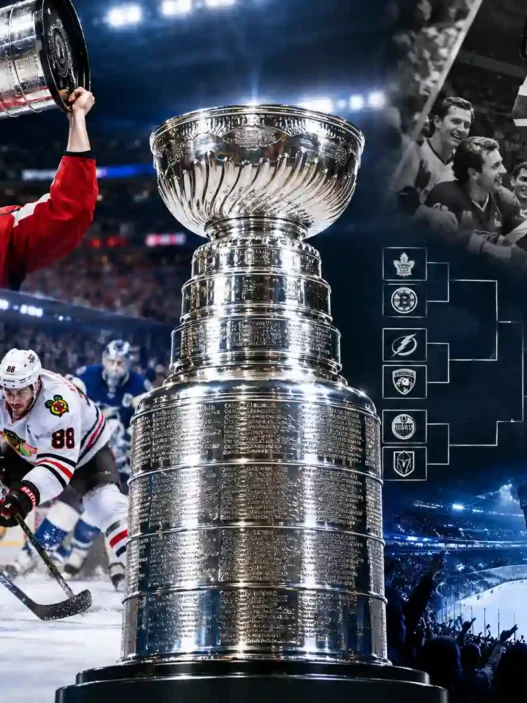
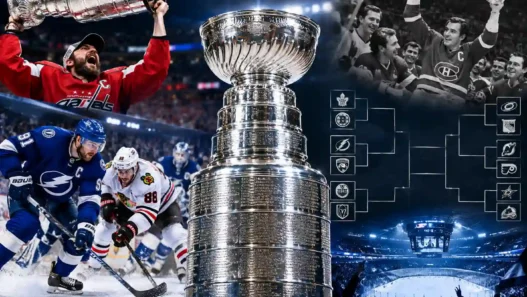
The National Hockey League is still the top professional league for the sport. It has 32 teams in the U.S. and Canada that compete for the Stanley Cup. The Stanley Cup is one of the oldest and most famous trophies in professional sports. The Carolina Hurricanes beat the Vegas Golden Knights to win their first Stanley Cup since 2006, with 37-year-old Jordan Staal becoming the oldest player to win the Conn Smythe Trophy as playoff MVP. That championship run gave us a real story to follow this year.
Beyond the NHL, professional hockey is a truly global game, with Europe’s Kontinental Hockey League and a host of national leagues in Scandinavia and Central Europe, along with the American Hockey League, the NHL’s primary feeder league for development. But international competition adds another important dimension, and this year’s Winter Olympics in Milano Cortina provided one of the most dramatic moments in recent sport’s memory, with Team USA knocking off Canada 2-1 in overtime to win Olympic gold for the first time since 1980 — with a number of those same Olympic stars going on to pursue the Stanley Cup just months later.
How College and Junior Hockey Feed the Professional Pipeline
The majority of players take one of two main routes to turn pro in the NHL. Canada’s major junior leagues – the Ontario Hockey League, Western Hockey League and Quebec Maritimes Junior Hockey League – are a traditional development route, but more players are increasingly opting for the United States’ NCAA college hockey pathway, which has become more prestigious and produced more NHL draft picks over the past decade.
The NHL Draft remains the main avenue for teams to acquire young talent and drafted players usually require several more years of development – in junior hockey, college or the American Hockey League – before they can have a full-time impact in the NHL. That longer development timeline is part of the reason why trying to identify future NHL stars years before they turn pro has become an increasingly important part of how teams build for long-term competitive success.
Why This Year’s Storylines Highlight Hockey’s Unique Calendar
The way the hockey calendar is structured creates storylines that few other sports can match, especially in an Olympic year when the NHL takes a break from its schedule to send players to represent their countries. This year’s Stanley Cup Playoffs took on a special significance with 84 Olympians from 11 different countries who had just competed in February’s Milano Cortina Games, including Carolina’s Jaccob Slavin who became just the second American in history, and just the ninth player overall, to win an Olympic gold medal and the Stanley Cup in the very same year.
That mix of individual achievement, team success, and very unique historical benchmarks is exactly what makes hockey’s structure so fun to follow closely, because one great season can lead to accomplishments that very much trace back to a player’s international career in a way that few other major sports allow in quite the same fashion.