





















































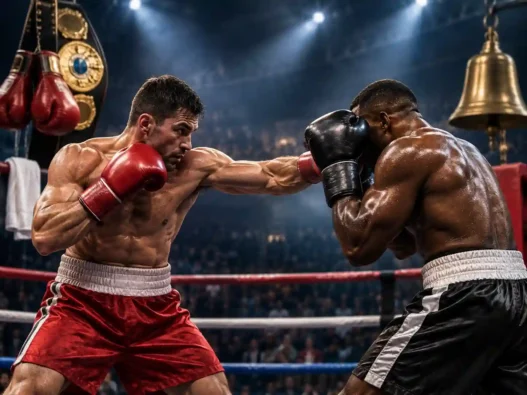
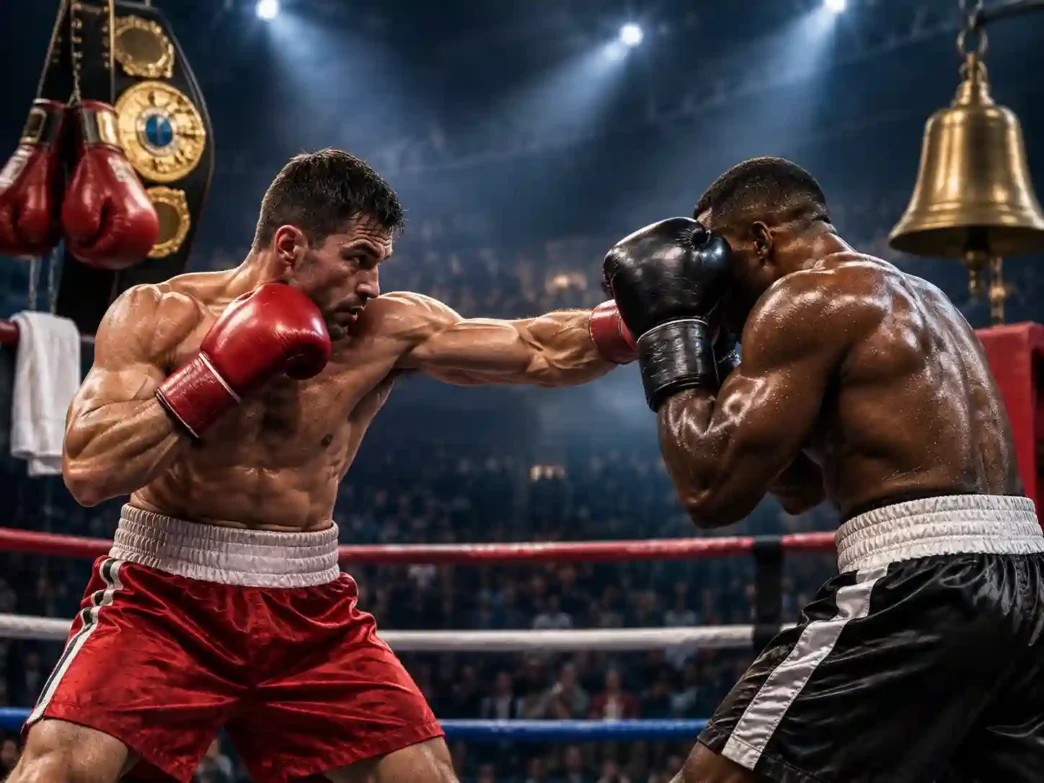
Boxing can seem simple on the surface. Two fighters enter a ring, put on gloves and try to outscore or stop each other. Indeed, professional boxing has a detailed set of rules regarding legal punches, rounds, weight limits, scoring, knockdowns, fouls and championship titles.
The sport also has a confusing structure for new fans. Boxing, unlike many of the major sports in the US, does not have one league with a single champion in each weight class. There are various sanctioning organizations that issue their own belts. There are promoters and broadcasters that dictate when the big fights are.
This boxing guide will explain the basics, such as how a fight is won, the major weight classes and how judges score a fight.
What are the basic boxing rules?
The basic rule is simple: Fighters can legally hit each other as long as they obey the referee. As a general rule, punches should connect with the knuckle part of the glove to the opponent’s legal target area. Fighters are not allowed to deliberately hit the back of the head, below the belt, or use other illegal techniques.
Warnings, point deductions or disqualification can also result from holding, hitting after the bell, hitting an opponent who is down and using the head or elbow to cause damage. Inside the ring, the referee controls the action and can stop a fight if a boxer is no longer defending himself properly.
How many rounds are in a boxing match?
The number of rounds depends on your type of fight. A championship fight in the professional ranks is usually twelve rounds . Each round lasts for three minutes with a one minute rest interval between rounds .
Non-title professional fights may be scheduled for fewer rounds. The precise distance may depend on the experience of the fighters, the rules of the commission and the agreement between the parties. Fans can’t treat all boxing matches the same. In amateur boxing, for example, the length of the rounds and the format of the competition can vary.
How does boxing scoring work?
Boxing uses a 10-point system, In a normal round the boxer who is judged to have done better gets 10 points, the other fighter normally 9. An 8-7 round is possible on a knockdown, but the precise scoring will depend on the context and rules in play.
When judges score a round they look at a number of components including clean punching, effective aggression, ring generalship and defense.
The big thing for new fans to know is that judges aren’t just counting total punches thrown. A fighter can land more punches and still lose a round if the other guy lands the cleaner or more effective punches.
What is a unanimous decision?
All three judges give the fight to same boxer. For example, if the scorecards read 116-112, 115-113 and 117-111 for a fighter, that boxer wins by unanimous decision. Usually this means the judges agreed on who won but it does not always mean they had identical scorecards.
What is a split decision?
A split decision is when two judges scored the fight for one boxer and the other judge scored it for the opponent. For example two judges may vote for Fighter A and the third judge feels Fighter B was the winner. Split decisions are often controversial because it means the judges viewed a competitive fight differently.
What is a majority decision?
If it is a majority decision, two of the judges score the fight for one boxer and the other judge scores the fight a draw. The fight goes to the boxer most people like . Not a unanimous decision, at least one judge did not score the fight for the eventual winner.
What is a boxing draw?
If the judges can’t decide who won, a boxing match can be declared a draw. If all three judges score a fight a draw, the fight is scored a draw. A majority draw is when two judges score a fight a draw and the third judges’ scorecard indicates a winner. If the judges come up with three different results then a split draw is also possible. It’s rare that a major boxing match ends in a tie, but the way boxing is scored allows for that to happen.
How do knockouts work?
A knockout (KO for short) is when the boxer is knocked down and does not beat the referee’s count, or is otherwise unable to continue. A knockdown is when a fighter touches the canvas with any part of his body other than his feet because of a legal punch or when the referee determines that a fighter has been knocked down under the applicable rules.
The referee’s discretion will decide if the bout is allowed to continue if a fighter gets up before the count ends, provided the fighter can do so safely.
What is a technical knockout?
A technical knockout, or TKO, happens when the fight is stopped by the referee, ringside doctor or fighter’s corner, but the boxer has not necessarily been counted out. A referee stops a fight if a fighter is taking too much punishment or is unable to defend himself intelligently. A corner, too, can end a contest by throwing in the towel. Officially , depending on the rules and circumstances , the result is usually a TKO .
What happens after a knockdown?
A knockdown is not the end of a boxing match by any means. Often the referee will begin a count and the fighter who has been knocked down must show he or she can continue safely.
A knockdown can also affect the judges’ score for that round. Under the 10-point-must scoring system, the fighter who scores a knockdown will often be awarded a 10-8 round instead of the more typical 10-9 score. Depending on the rules of the contest, multiple knockdowns can lead to larger score differences.
Boxing weight classes explained
Weight classes are there so dudes who are totally different sizes can’t fight each other.” The main professional divisions begin at minimumweight and go up to heavyweight with several classes in between. Sanctioning bodies can have different exact weight limits and naming conventions, particularly for newer or less universally recognized divisions. The commonly accepted professional divisions for men are:
- Minimumweight: Up to 105 pounds
- Light flyweight: Up to 108 pounds
- Flyweight: Up to 112 pounds
- Super flyweight: Up to 115 pounds
- Bantamweight: Up to 118 pounds
- Super bantamweight: Up to 122 pounds
- Featherweight: Up to 126 pounds
- Super featherweight: Up to 130 pounds
- Lightweight: Up to 135 pounds
- Super lightweight: Up to 140 pounds
- Welterweight: Up to 147 pounds
- Super welterweight: Up to 154 pounds
- Middleweight: Up to 160 pounds
- Super middleweight: Up to 168 pounds
- Light heavyweight: Up to 175 pounds
- Cruiserweight: Up to 200 pounds
- Heavyweight: More than 200 pounds
What is a catchweight fight?
A catch weight fight is when the weight limit is negotiated and is outside the normal division limit for the fighters. For example, two fighters from different divisions might agree to meet at a certain weight somewhere in the middle of their normal limits.
Catchweight fights are particularly prevalent when established stars from different weight classes meet. The specific contractual terms can differ, so fans should check the official fight announcement and weigh-in results for the particular contest.
What are boxing championship belts?
There is no one governing body that controls all the professional championships in boxing. Instead, multiple major sanctioning organizations grant world championships. A fighter can have one organisation’s title but not the others. One of the biggest differences between boxing and sports like the NFL or NBA, where one league determines its champion, is that structure. The four organizations most commonly recognized as sanctioning bodies for the sport’s major men’s world championships are:
- WBA — World Boxing Assoc.
- WBC — World Boxing Council
- IBF — International Boxing Federation
- WBO — World Boxing Organization
Why are there multiple champions in boxing?
Multiple sanctioning bodies operate independently, leading to the development of a fragmented title system. Each organization has its own set of rankings, championship rules and mandatory challengers. This means that there can be more than one official world champion in the same weight class. That can make boxing difficult for new fans to follow, because “world champion” doesn’t always mean that everyone agrees on who the champion is. If one fighter holds more than one major belt at the same time, the boxer could be called a unified champion .
What is an undisputed boxing champion?
An undisputed champion is understood to be a fighter that has all four major recognized world titles in the same division: WBA, WBC, IBF and WBO. To become undisputed in modern boxing is one of the toughest things to do, as the champion has to unify the titles and meet the criteria of multiple sanctioning bodies. So the term is frequently used to refer to a fighter who has topped an entire division, and not just won the belt of one organization.
How boxing rankings work
Every major sanctioning body has its own rankings. The placement of a fighter can be influenced by recent results , quality of opposition , activity and any other criteria the organization chooses to use . The rankings matter because championship bodies can require champions to defend against mandatory challengers. That means a major title holder cannot always cherry-pick any opponent he or she wants.
How does a referee affect a fight?
The referee is there to make sure the rules are followed and the fighters are safe. A referee can stop fighters holding, warn them, order them to break, count knockdowns and stop the contest when necessary.
The role of the referee is particularly important in boxing where high-impact punches are thrown repeatedly. A fight can be competitive but still reach a point where it is too dangerous for one fighter to continue.
What happens if a fight is stopped because of an injury?
“It is contingent upon the circumstances and the time that the fight is stopped. The rules can determine whether the fight is a technical decision, no contest or something else if an accidental foul or injury stops a bout. The decision can depend on the round and the reason for the injury and the rules of the athletic commission sanctioning the event.
Professional boxing vs. amateur boxing
The idea for professional and amateur boxing is the same, fighting with punches inside a ring, but the way the sport is competed in is different. Pro boxing usually has longer fights and places more emphasis on individual careers, rankings, championship titles and commercial events.
“Amateur boxing is more about development and tournament competition. Fighters compete in accordance with rules designed for that particular competition, and scoring schemes may not be the same as those in professional contests. So the fans should look at the rules of the specific event and not assume all boxing matches are governed the same way.
Boxing terms every new fan should know
A few basic terms can make watching boxing much easier.
KO: A knockout that ends the fight because a fighter cannot continue.
TKO: A technical knockout in which the referee, doctor or corner stops the contest.
Decision: The winner is determined by judges’ scorecards after the scheduled rounds.
Draw: The judges do not establish a winner.
Knockdown: A fighter is sent to the canvas by a legal punch or otherwise meets the regulatory definition.
Unification: A fight involving champions from different major sanctioning organizations.
Undisputed: A fighter holds the WBA, WBC, IBF and WBO world titles in the same division.
Pound-for-pound: A ranking concept used to compare fighters across different weight divisions.
Want to follow the action beyond the scorecards? If sports betting is legal where you live, you can explore licensed sportsbooks to compare boxing odds, moneylines, method-of-victory markets, and round totals for upcoming fights. Always check the terms and bet responsibly.