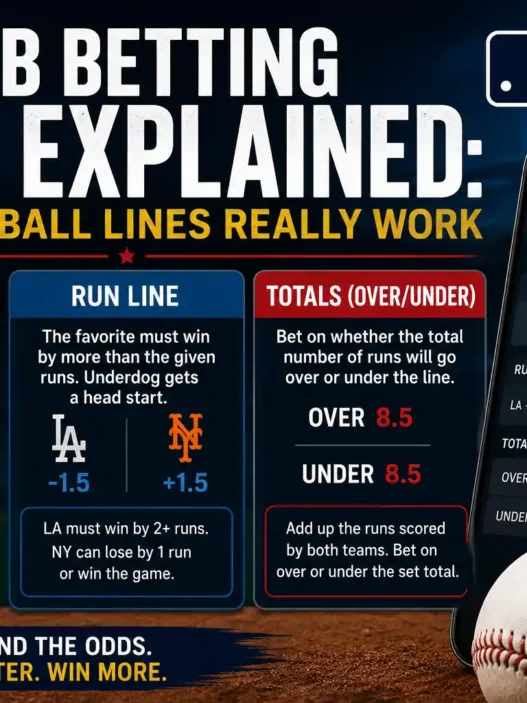























































For many sports fans, betting odds simply represent numbers attached to a game. They tell you which team is the favorite, how much a bet could win or what the sportsbooks think is going to happen when the action starts. But the mind of a seasoned gambler is different.
Every move in the odds of sports betting is a story of market sentiment, flow of funds, injury reports, public perception and risk management. Odds are always on the move as sportsbooks react to new information and betting activity, which makes them one of the most valuable indicators in modern sports wagering.
Why do the odds move and what does it tell us? It can help bettors make smarter decisions and it gives sportsbooks a better insight into how betting markets work.
Sports betting odds are not predictions
Many casual bettors have this misconception that sportsbooks utilize odds only to predict the outcome of the game. But odds have several functions in reality. Oddsmakers obviously factor in things like team strength, player performance, past performance, injuries and matchups, but sportsbooks also use odds to manage risk and balance action on both sides of a wager.
They don’t try to predict the outcome of an event – at least not necessarily. Instead they are trying to create a market that draws betting interest but also protects profitability. This is why odds can move even if nothing has changed in the actual game.
Why odds move before a game starts
Odds rarely stand still. From the time the sportsbooks release their opening lines up until game time, betting markets are always responding to information. Several factors usually affect the movement of sports betting odds.
Injury and lineup updates
Player availability is still one of the biggest market movers. A star quarterback being ruled out Sunday morning can move NFL betting lines significantly. In the NBA, too, late injury news can turn the odds around quickly. Sportsbooks monitor injury reports closely, because when a star player is out, bettors respond immediately.
Weather conditions
Line movement is especially susceptible to weather when it comes to outdoor sports. Heavy rain, strong winds or extreme temperatures are all conditions that can affect scoring expectations and game strategy, so sportsbooks will change spreads and totals to reflect the expected conditions.
Public betting activity
Even if a team is not worth anything, if it is popular it will still attract a lot of wagers. If a lot of money comes in on one side of a game, the books might tweak the numbers to try and get some action on the other side and limit their risk.
Professional bettors
The biggest factor in line movement is probably professional wagering activity. So when a revered bettor makes a large bet , sportsbooks are quick to react . These bettors are regarded as the most knowledgeable players .
The difference between public money and sharp money
Public money: Bettors who are using public money tend to go with well-known teams, recent winners and popular narratives. For instance, if a heavily favored NFL team has won a bunch of games in a row, recreational bettors might still back that team, regardless of the value of the betting line.
Sharp money: Sharp bettors, or pros, look to exploit pricing inefficiencies rather than bet on popular teams. They look for situations where the odds don’t accurately reflect the probabilities.
When sharp action comes in, sportsbooks respect the information behind those wagers and odds often move quickly as operators respond. This is a difference that can give you valuable sportsbook insights as to why some lines change unexpectedly.
What line movement can reveal
Odds movement often tells bettors more than headlines or social media discussions.
Market confidence : A large move in one direction may indicate increasing confidence in a particular outcome in the market.
New info is coming in: Odds sometimes move before big news is widely known. The sharp players react quickly to the info and the sportsbooks move the prices before the squares even know what the move is for.
Sportsbook risk exposure: Sometimes the movement of the odds doesn’t tell us what a sportsbook thinks about the game, but how much liability it has on each side of the game. Which is why context is always something bettors should consider when looking at market moves.
Why different sportsbooks offer different odds
One of the most common questions from bettors is why one sportsbook may have different odds than another. The answer is how operators manage risk. Each sportsbook has its own clients, betting volume and exposure.
So sportsbooks can move prices independently based on the bets they are taking. This gives punters the chance to shop around and potentially get better odds. Lots of experienced gamblers will have accounts with many sportsbooks just to compare sports betting odds before placing bets.
Understanding closing line value
For serious bettors, one of the most discussed ideas is closing line value, or CLV. The last line refers to the final odds available just before a game begins. If a bettor gets the better closing line, they have usually found some good value in the market. For example, if a team is -3 early in the week but closes at -5 before kickoff, bettors who got the earlier number are in a better position. Closing line value is not a guarantee of winning bets, but many professionals believe it is an important indicator of long-term success in betting.
How betting predictions influence the market
The betting predictions you see today are the product of a diverse range of sources, from statistical models to analyst opinions, advanced metrics and even artificial intelligence tools. If influential forecasts become popular, they can lead to betting activity that influences market prices.
But bettors should remember that predictions alone do not move the odds much. Money flowing into the market moves markets. The strongest betting predictions are typically the ones based on educated betting activity, not social media noise or public perception.
What the Action Network odds and market tracking tools tell bettors
Many bettors utilize market-tracking tools like Action Network odds screens and similar apps to monitor line movement throughout the week. The tools help the user to identify Opening lines, Closing lines, Market-wide line moves, Public betting trends, Sharp betting indicators, and Sportsbook pricing differences. These moves give bettors a better idea of how markets move in response to information and betting action. These tools have become an essential part of modern betting news and analysis for many users.
Why odds movement is more important than ever
Sports betting markets are faster, more efficient and more data-driven than ever before. Sophisticated analytics and pervasive mobile betting, coupled with real-time information, enable sportsbooks to adjust to changing conditions almost immediately.
For bettors, the importance of understanding odds movement has gone from being an advanced strategy to an essential part of deciphering the market. Every movement in sports betting odds is the result of information, opinion and money. Learning to read these signals can provide some useful insight into how sportsbooks and bettors view an event before the outcome is known.