













































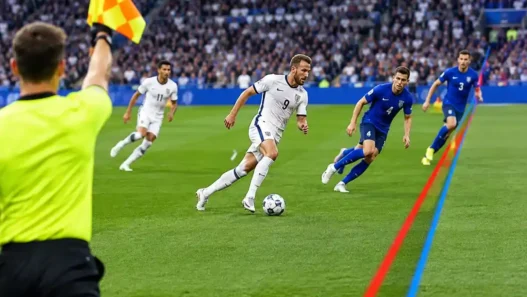






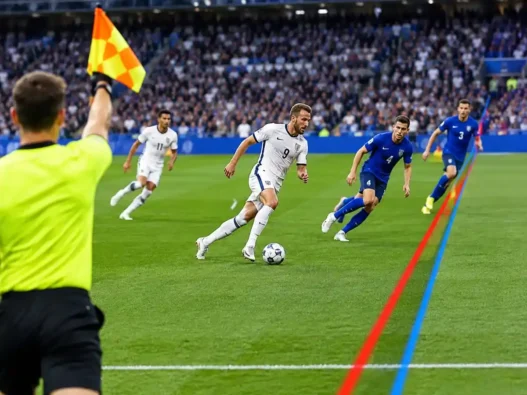
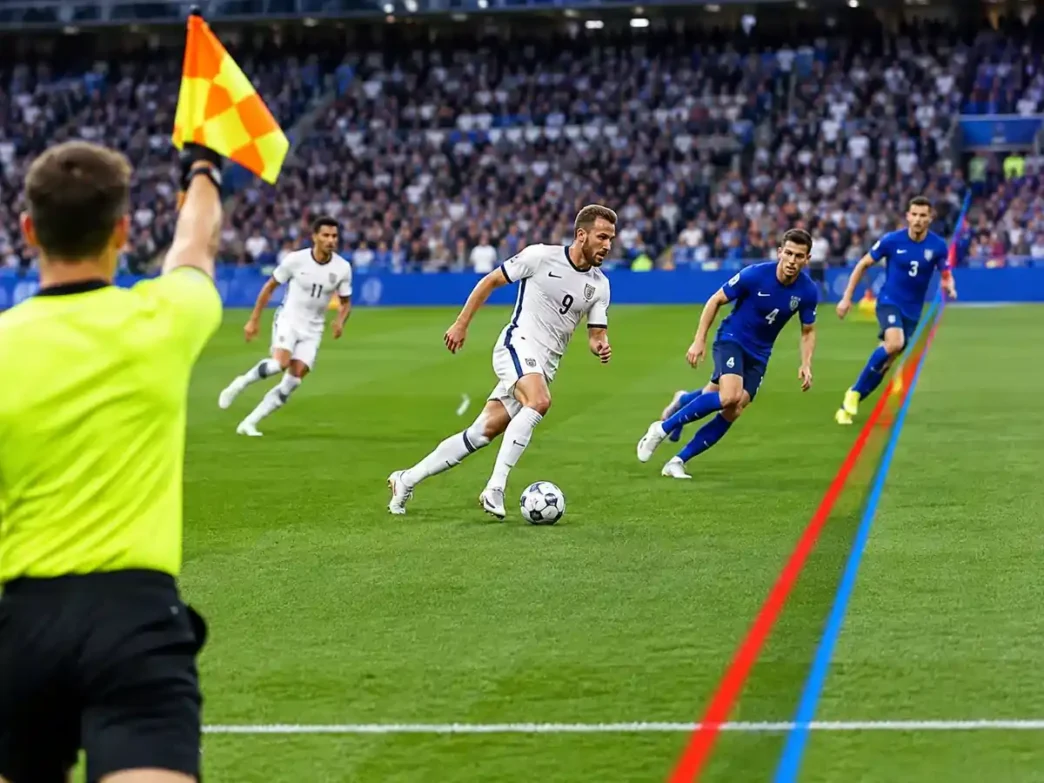
The result of crucial games is often determined by offside. It can stop a goal, break up a promising attack or spark furious rows between players and spectators. Offensive players may not gain an unfair advantage by loitering near the opponent’s goal. But just because a player is close to the goal doesn’t mean they’re offside.
The referee analyzes the position of the attacker when a teammate plays the ball. The official also looks to see if that player is engaging in active play. If you’re new to soccer, recognizing offside makes the game easier to watch. It also helps explain tactical decisions made by top soccer players and famous international soccer rivalries.
Offside decisions can affect attacking plays, be it Lionel Messi’s through-balls or Cristiano Ronaldo’s runs from behind defenders. Here’s how the rule works, with practical match circumstances and examples.
What Is Offside in Soccer?
Offside is a rule that prevents attackers from getting an unfair advantage in front of the goal of the other team . Law 11 of the International Football Association Board (IFAB) covers the offside rule. A player is in an offside position when::
- The player enters the opponent’s half, excluding the halfway line.
- The player stands closer to the opponent’s goal line than the ball.
- The player stands closer to the goal line than the second-last opponent.
The second to last opponent is usually a defender, while the goalkeeper is often the last one. The rule does not clearly state that the goalie must be last. Importantly, it is not an offense to be offside. The player must also participate in active play.
How Does the Offside Rule Work?
The referee checks the position of the attacker when the teammate plays or touches the ball. The official then judges if the attacker is participating in the play that follows.Take this simple example:
- Team A attacks Team B’s goal.
- Team A’s striker stands behind the last two defenders.
- A midfielder plays a through ball towards the striker.
- The striker receives the pass and scores.
The referee disallows the goal if the striker occupied an offside position and became involved in play. But if the striker is level with the second last opponent when the midfielder plays the ball, the referee awards the goal. Where the attacker is when he/she receives the pass doesn’t matter, it’s when.
What are the three main conditions for an offside offence?
1. Interfering with play
An attacker is offside if they are in an offside position and interfere with play by playing or touching the ball passed to them by a teammate. Imagine a midfielder with a long pass to two strikers. One forward is offside and receives the pass. The attack is stopped by the referee and an indirect free kick is awarded to the defending side.
2. Interfering with an opponent
An offside offense may be committed by an attacker without touching the ball. That’s when a player’s location or movement impacts an opponent’s ability to play. Say, for instance, that an offside striker stands right in front of the goalkeeper. The striker screens the goalkeeper for a shot by a teammate. The referee may deny the goal if the striker visibly impedes the goalkeeper’s view.
3. Gaining an advantage
The attacker may also be offside if he collects a rebound from a teammate’s shot. This is the case when the ball rebounds off the crossbar, goalpost or defender. For example, if a teammate shoots, the striker is offside. The goalkeeper stops the effort but the ball rebounds toward the striker. If the striker scores from that rebound the referee rules the goal out.
Offside Explained With Real Match Situations
The best way to understand offside is through situations that regularly occur during professional soccer matches. These examples show how referees interpret different attacking movements.
Situation 1: A striker runs behind the defensive line
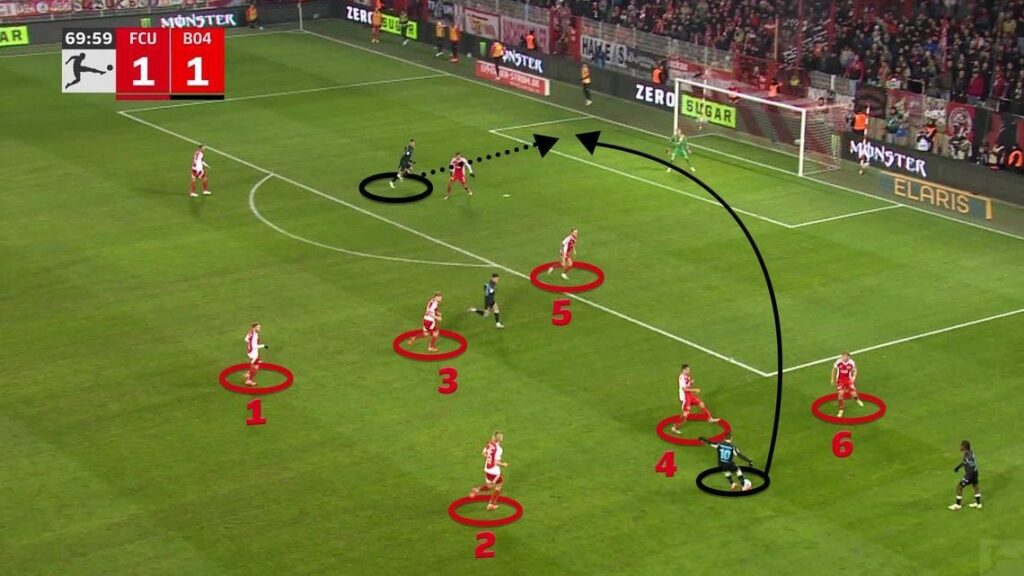
Source: bundesliga.com
Picture a striker lying in wait behind the opposition defense during a counter attack. The midfielder passes forward to the striker. When the midfielder passes the ball, the striker is ahead of the second-last opponent and an offside offense takes place. If the striker gets engaged, play is stopped by the referee. It is a very common circumstance in teams that play with high defensive lines. Attackers will aim to time their runs carefully and will avoid running too early.
Situation 2: A player stands offside but never touches the ball
Picture an attack with two attackers sprinting toward the opponents goal. One player is in an offside position, the other in an onside position. The attacker is onside and scores. Midfielder passes to the attacker. If the player in an offside position does not touch the ball or interfere with an opponent, the referee allows the goal. This example makes an important point. The player in an offside position is not the reason to stop the play.
Situation 3: A goalkeeper saves the shot, but an offside striker scores
A midfielder is shooting at goal with a teammate waiting behind the defensive line. The goalkeeper saves, but the ball rebounds toward that striker. The striker gets the rebound and scores but the referee rules it out. The striker was ahead from an offside position. The same idea applies to the ball rebounding off the goalpost or crossbar.
Situation 4: A defender deliberately plays the ball
A defender deliberately kicking a long pass away. But the clearing is going straight to an attacker who was previously offside. If the defender deliberately kicked the ball the referee may let play continue. If a clearance attempt is made but the ball is not cleared, that of itself shall not constitute an offside offense. However, for purposes of this exception, a deflection or a save is not a purposeful play. This discrepancy can frequently cause confusion in tight VAR assessments.
When Is a Player Not Offside?
Soccer has several important exceptions that every viewer should understand.
1. Receiving the ball directly from a throw-in
A player can receive the ball directly from a throw-in while standing beyond the defensive line. The referee cannot penalise that player for offside.
2. Receiving the ball directly from a corner kick
Players can position themselves near the opponent’s goal during corner kicks. The offside rule does not apply to a direct reception from a corner.
3. Receiving the ball directly from a goal kick
A player can stand beyond the second-last opponent and receive a direct goal kick. The referee allows play to continue without an offside offence.
These three restarts create specific exceptions under IFAB Law 11. However, normal offside rules apply after another teammate touches the ball.
How Does VAR Check Offside Decisions?
VAR: Video Assistant Referee. The VAR assists officials in reviewing close offside judgments. It can check whether an attacker was behind the second-last opponent when passing.
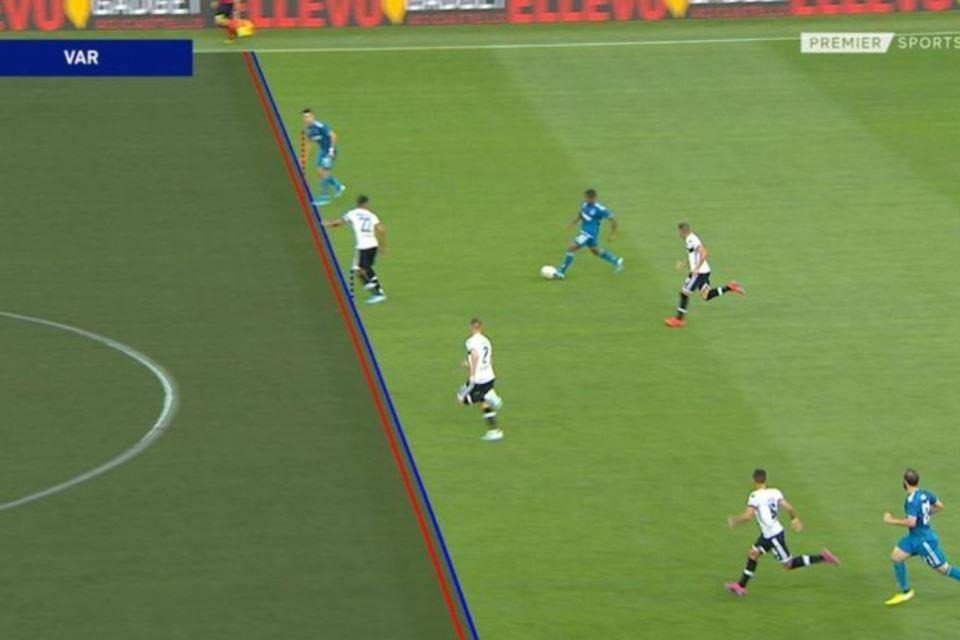
vivagoal.com
VAR uses the camera video and calibrated lines to determine the players’ positions. Officials look at the relevant body parts of the attacker and defender. The system does not count arms or hands to work out offside. Instead it looks at the head, the body and the feet.
The referee also examines to see if the attacker was taking part in active play. This crucial judgment cannot be substituted by technology. “When you have close calls, it takes time to figure out the exact point of touch. Also, they need to know who the players were in the resulting action.
How do top soccer players beat the offside trap?
The offside trap is a defensive tactic that involves coordinated positioning to capture attackers beyond the defensive line. Defenders advance in unison, pushing opposition attackers into offside positions. But the best soccer players counter this tactic with mobility and timing.
Some common techniques include:
- Delayed runs: Strikers wait for the midfielder to prepare the pass before accelerating.
- Curved runs: Attackers approach the ball from wider positions to avoid crossing the defensive line early.
- Quick passing: Midfielders release through balls before defenders can move forward.
- Movement between defenders: Strikers exploit gaps between centre-backs and full-backs.
Lionel Messi, Cristiano Ronaldo, Kylian Mbappe and Erling Haaland have all used various techniques in attack. You can see by the way they moved that timing and attentiveness may create chances.
Want to know soccer rules, match strategies, player performances and betting terminology? SportsArcane has sports explainers, betting recommendations, match previews and commentary. If you love legendary international soccer rivalries or follow the best soccer players, SportsArcane helps you understand the game beyond the final result.