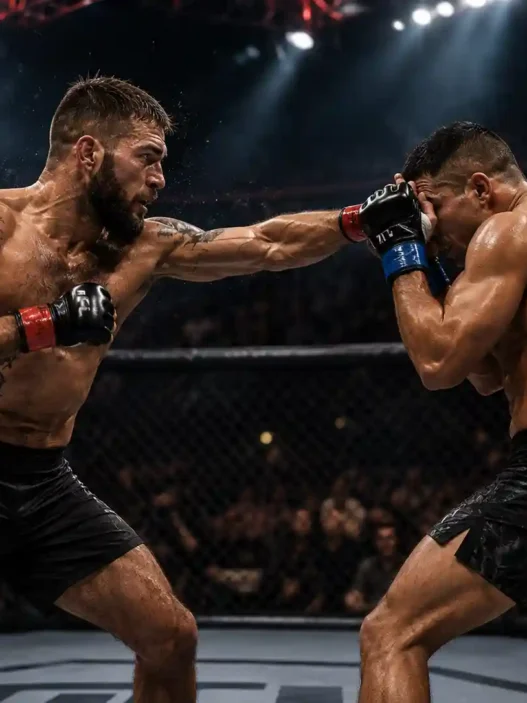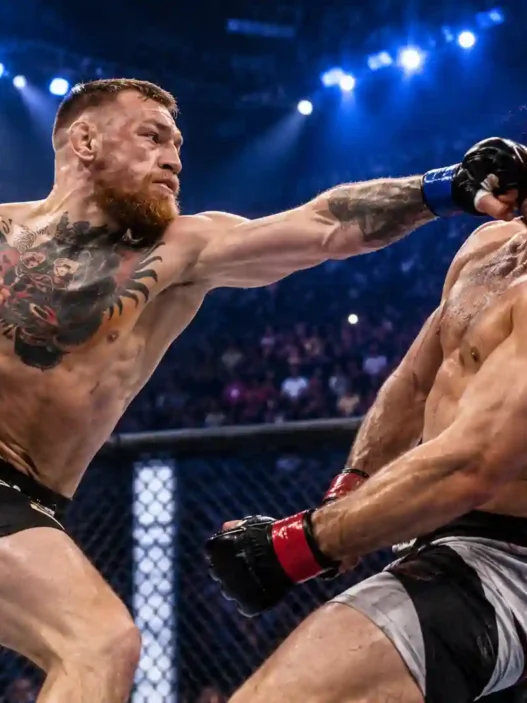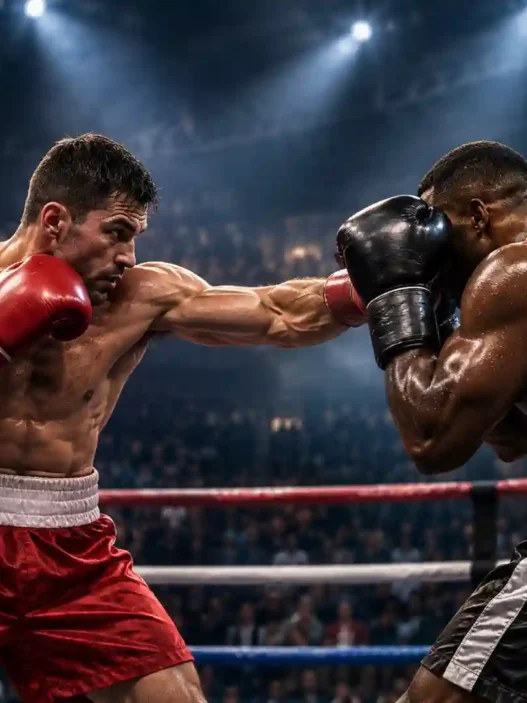














































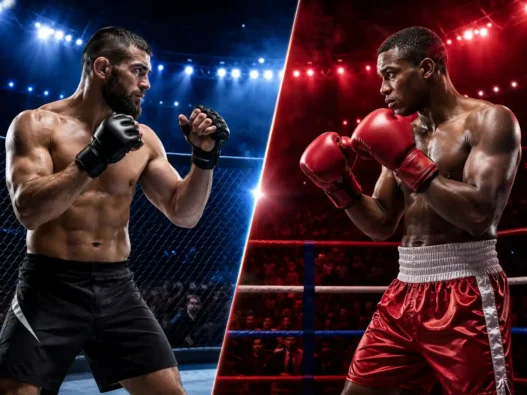
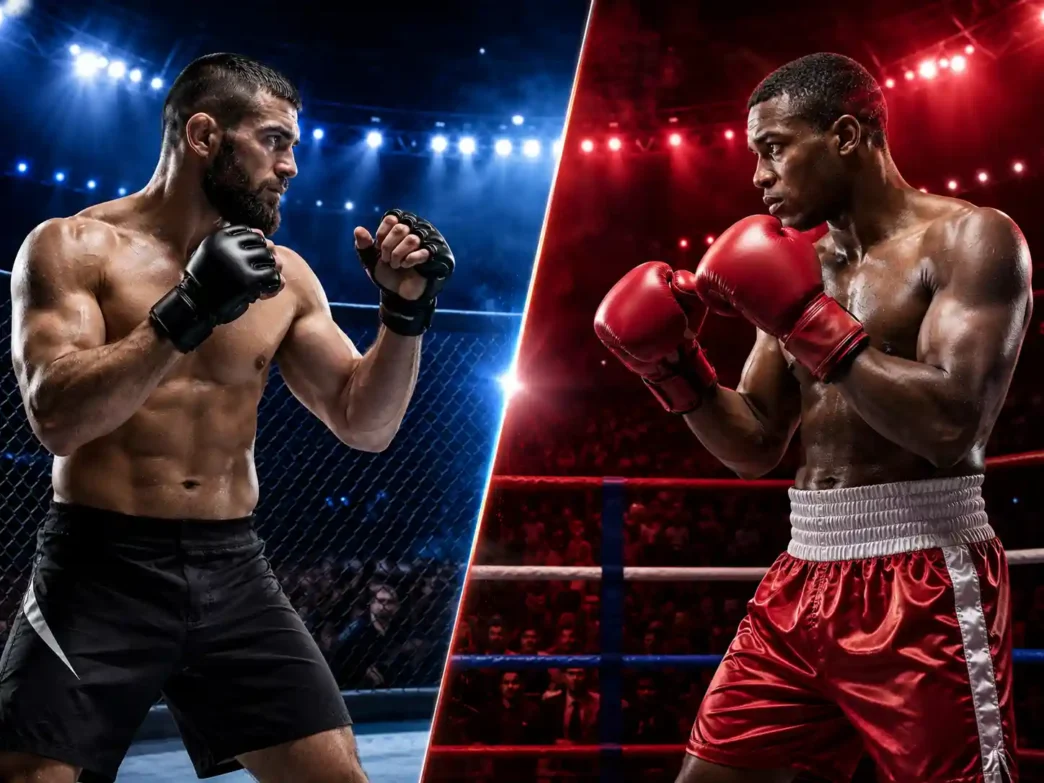
Put a hundred combat sports fans on the spot and ask them if they’d prefer to watch boxing or the UFC, and you will get a hundred impassioned, sometimes fiery responses. Both sports require immense athleticism, both have produced real global superstars and both still attract huge crowds for their biggest events. But the two sports are built on fundamentally different rulesets, strategic demands and business models that affect everything from the way a fight actually plays out to the way each sport is marketed to a mainstream audience.
This guide explains the exact ways in which UFC and boxing differ, and uses this year’s biggest events in each sport to show how those differences play out in practice.
Rules and Scoring
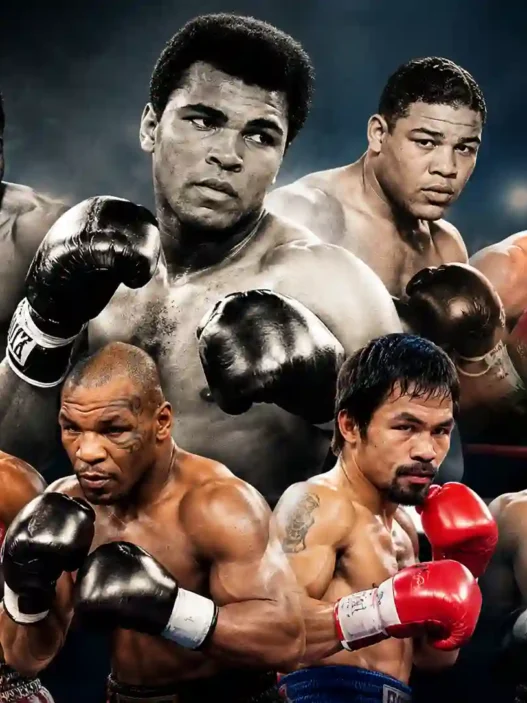
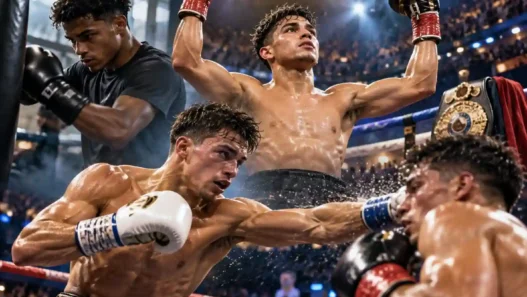
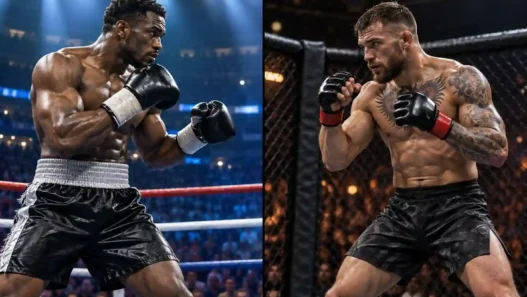
Boxing’s rules are relatively simple versus MMA, preventing competitors from doing much outside punching (from a standing position) over a set number of rounds (usually 10-12 for a championship fight) of three minutes each. The fighters win by knockout, technical knockout or a judges’ decision based on effective punching, ring generalship and defense, criteria that have remained largely unchanged for well over a century.
Fighters in UFC bouts are governed by a much more extensive rule set and can punch, elbow, knee and kick each other and use any grappling moves they want, whether it’s a takedown, submission or pounding the other guy on the ground. The process of judging an MMA fight is far more complicated than simply scoring a fight with punches as the only weapon. Judges are required to judge a far greater range of skills at the same time, from striking damage to grappling control, submission attempts and overall octagon control, all with the same ten-point must system that is borrowed from boxing.
Strategy: Distance Management vs. Complete Skill Integration
Boxing strategy is about distance, timing and combination punching. Elite boxers spend years developing the subtle footwork and head movement needed to control the range on an opponent. Grappling and clinch fighting are heavily restricted, and boxers can concentrate all of their training on one discipline, with often extraordinary technical polish in that narrower skill set.
MMA strategy is a very different preparation as fighters have to be aware of the striking, wrestling and jiu-jitsu threat in every exchange. If a fighter focuses only on the pure boxing side of things and neglects the takedown defense aspect, no matter how technically sound their striking is, they run the risk of being taken down and held for a whole round. That’s why elite MMA training camps have coaches from multiple disciplines rather than a single specialized boxing coach. That demand is exemplified by the UFC welterweight title picture this year, where champion Islam Makhachev is built around dominant wrestling that completely neutralizes opponents’ striking – a strategic dimension that simply does not exist in boxing.
Weight Classes and Fight Frequency
Boxing has many, many more weight classes than any of the other sports. Boxing has 17 major weight classes, whereas the UFC has fewer and broader divisions. Boxers can be matched more closely in size because boxing has more weight classes. In the UFC, bigger weight classes may sometimes have bigger size differences amongst fighters in the same division.
Also, the frequency of fights in the two sports is worlds apart. The top boxers at championship level typically only fight once or twice a year because of the physical toll of training camps and the commercial value of each individual fight. UFC champions and top contenders, on the other hand, tend to like to fight more often, twice or even three times a year usually, due to the wider range of skills on display, which means that each fight is less of a makeup or break time than what exists in boxing’s slower rhythm at the very top level.
Popularity and Business Models: PPV, Streaming, and Crossover Events
The business models of both sports have undergone dramatic changes in recent years and 2026 has made those changes particularly visible. This year, the UFC shifted all of its events to Paramount+, dropping traditional pay-per-view pricing for numbered events in favor of a subscription-access model meant to maximize viewership, not per-event revenue.
The landscape of boxing has also further diversified from traditional pay-per-view to streaming services like DAZN to major one-off events on mainstream platforms like Netflix. The Canelo Alvarez vs Terence Crawford super middleweight unification bout last year, which was available on Netflix, drew over 41 million viewers and made Crawford the undisputed champion.
Before that, the Jake Paul vs Mike Tyson crossover event on the platform had an even larger audience of more than 60 million viewers. These figures say something crucial about the way boxing is sold now: by doubling down on huge crossover events and broad streaming platforms in order to reach audiences way beyond boxing’s usual fanbase.
Crossover Stars and Mainstream Attention
Boxing has always had a unique way to produce crossover superstars that can transcend the sport entirely, and that has only been amplified with the rise of influencer-driven crossover boxing. Jake Paul’s relentless run of the biggest viewership numbers in boxing even with a lot of skepticism from the traditional boxing fan base proves there is a ton of mainstream drawing power outside the sport’s traditional championship structure.
The UFC has found its own path to mainstream crossover appeal, but through a somewhat different process, building personality-driven stars whose charisma and social media presence allow them to reach far beyond the hardcore MMA fanbase. Both sports have worked out well that technical excellence alone does not secure mainstream commercial success and both have tailored their biggest events to suit the broadest possible audience.
Which Sport Draws Bigger Audiences Right Now
It’s become really hard to compare overall popularity between the two sports directly because of how differently each measures success in 2026. The biggest crossover boxing events, especially those shown on platforms like Netflix, have posted numbers that dwarf just about anything in the history of combat sports, due to the format’s unique ability to draw in casual, non-boxing fans for a one-off spectacle event.
Meanwhile, the UFC has moved to a commercial model based on consistent weekly programming, rather than the occasional mega-events, producing events on virtually every week of the year through Fight Nights and numbered pay-per-view-turned-subscription cards. This results in a different kind of relationship with the audience, one of constant continuous engagement, rather than the more hit-driven, sporadic approach of boxing. This means that a direct audience comparison between the two sports is more like comparing a weekly television series with the occasional blockbuster feature film.
Why Fans Often Follow Both Sports Closely
They may be rivals in the world of casual sports media conversation, but plenty of combat sports fans follow both UFC and boxing closely, appreciating each for truly different reasons. Boxing is rewarded with a deep appreciation of pure technical striking craft honed over generations of tradition MMA offers the unpredictability and tactical complexity of mixing multiple combat disciplines into a single unified ruleset
For bettors and fans following both sports, understanding these basic differences – as opposed to viewing them as merely different versions of the same product – gives a much better read on how fights are likely to play out in each sport and why some fighters flourish in one discipline while potentially struggling to adjust to the other.