






























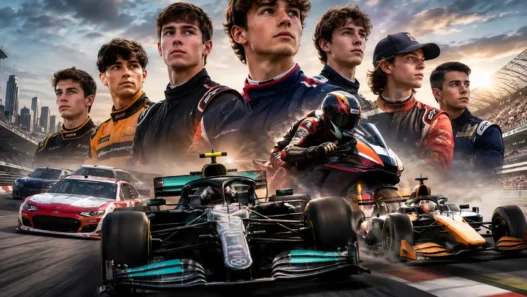












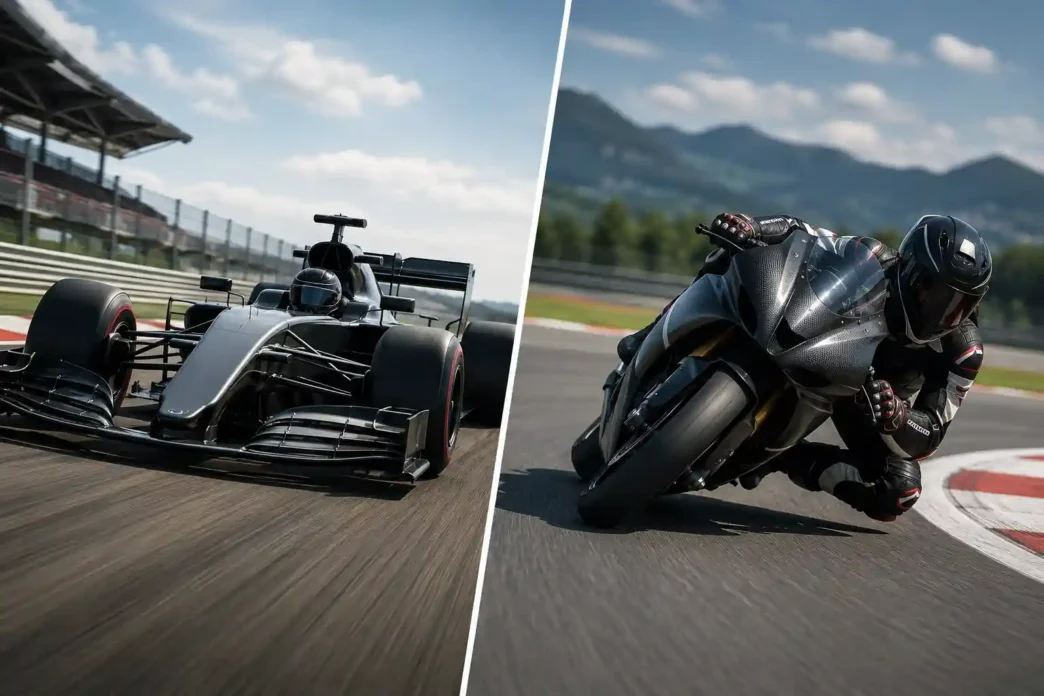
Ask a motorsport fan is an F1 car or MotoGP bike quicker? You will start an endless argument. Both series are at the top of their fields. They both push the athletes and the machines to real physical limits. Both have devoted, sometimes tribal, fan bases who claim their sport is the purer test of speed.
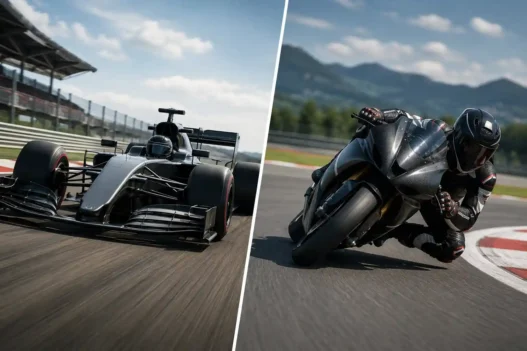
The honest answer is: it depends on what you are trying to measure. This guide tells you the real differences between F1 cars and MotoGP bikes, in terms of speed, acceleration, cornering and race format, so you can put the debate to bed with facts, not vibes.
Top Speed: Closer Than You’d Think
In terms of outright top speed between the two series, technically speaking, Formula 1 has the record. It’s not the fastest speed in an F1 car, though. The fastest was recorded in Qualifying at Monza in 2016, when Valtteri Bottas hit 372.5 km/h or about 231 mph.
MotoGP isn’t far off either. Brad Binder has also hit 366.1 km/h at Mugello, with Johann Zarco setting a similar top speed in Qatar. That’s a difference of less than four miles per hour between a 1,000 horsepower hybrid race car and a motorbike you could almost fit in the back of a pickup truck.
But here’s the thing. On shared circuits ( like the Circuit of the Americas ), MotoGP bikes will often reach higher speeds than F1 cars on the same straightaway . It’s a serious thing. A MotoGP bike weighs roughly 157kg (346lb) with fuel, against the minimum weight of 752kg for an F1 car. There is less mass to push so the bike can reach its terminal velocity faster and sometimes even beat the car in a straight line drag race, even though it has less horsepower available.
Acceleration: A Genuine Dead Heat, Then a Split
Both machines are surprisingly close from a standstill to 100 km/h, with F1 cars and MotoGP bikes both doing the dash in about 2.6 seconds. That’s a very similar burst of acceleration from four wheels to two.
The gap opens up at elevated speeds. Well, MotoGP bikes can actually pull away between 100 and 200km/h, because riders can keep working the throttle harder than an F1 car’s electronics can at that point. Push harder to 300 km/h though, and the F1 car reclaims the lead, completing the 0-300 km/h sprint in around 10.6 seconds against around 11.8 seconds for the bike.
The reason for most of this back-and-forth is power-to-weight ratio. MotoGP has a figure of about 1.9 horsepower per kilogram, which is better than F1’s 1.3-ish. That’s why the bikes are so explosive off the line and through the midrange, though at the very top end the raw horsepower and aerodynamic tools of the car win out.
Cornering and Lap Times: Where F1 Pulls Away
Here the comparison is no longer a close one. At racing speeds an F1 car produces more downforce than its own weight, giving the tires about twice the grip they would have if the car were stationary. That allows drivers to withstand cornering forces of five to six lateral Gs. No motorcycle could ever do that, given the position of a rider’s body and the physical limits of leaning a bike into a turn.
By contrast, MotoGP riders are limited to about 1.5 lateral G and have to start braking significantly earlier than an F1 driver approaching the same corner. For example, at the Rindt curve at the Red Bull Ring, F1 cars have about 190 km/h through the bend while MotoGP bikes are down around 120 km/h at the same point on track.
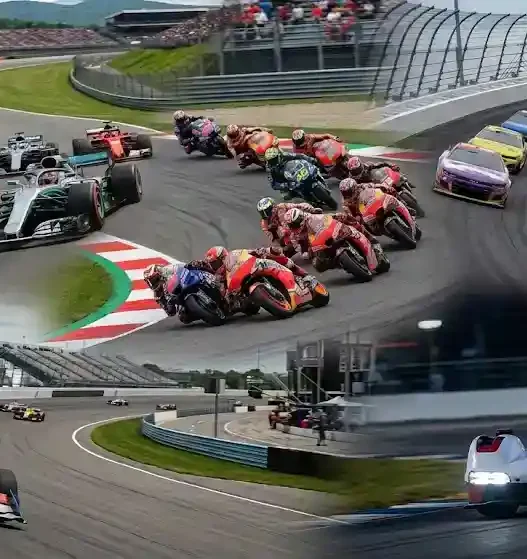
Add that all up for a full lap and the gap becomes dramatic. On shared circuits, such as Mugello, Formula 1 cars have been as much as 25 to 30 seconds faster than the best laps of MotoGP on the same track. That’s a huge margin in a sport where usually hundredths of a second separated the front of the grid, and it’s the clearest evidence that four wheels, large tires and heavy aerodynamics simply out-corner two wheels and rider skill alone.
Machines and Engineering: Two Completely Different Philosophies
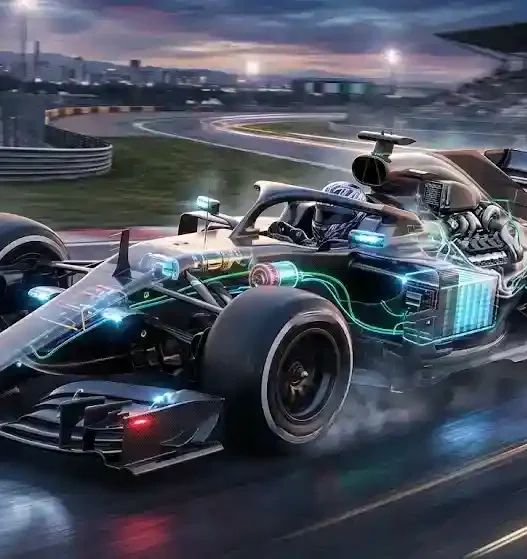
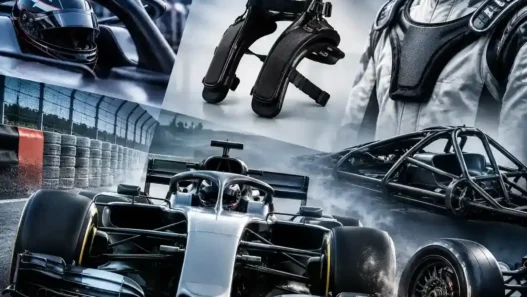
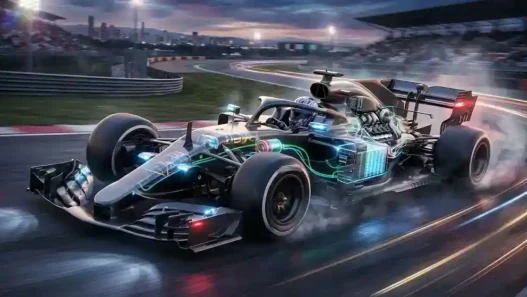
The 2026 F1 power units are 1.6-liter turbocharged V6 hybrids, with approximately 1,000 horsepower, and almost half of that is now delivered from electrical energy rather than the combustion engine, with the engine revving up to 15,000 RPM. Every system in the car, from the active aerodynamics to the energy deployment strategy, is engineered by a team of hundreds working to shave tenths of a second off a lap.
MotoGP almost matches this performance in just about the opposite way. The bikes have 1000cc, four-cylinder, naturally aspirated engines that spin up to around 18,000 to 19,000 rpm and produce somewhere in the region of 280 to 300 horsepower. It all comes down to the bike, the lightweight construction and the physical technique of the rider and technology such as ride-height devices, sophisticated traction control and anti-wheelie systems that help harness raw power to go forward without flipping the machine over.
The sound is also different in the philosophy. F1 turbo hybrids scream around 118 decibels while MotoGP naturally aspirated bikes scream at a much louder 128 decibels. Stand trackside at either race and your ears will tell you the difference in seconds.
Race Format and Racing Style
F1 races covers around 305 km and generally last around 90 minutes depending on cautions, safety cars and weather. The heart of the sport lies in strategy, with pit stops, decisions on tyre compounds and fuel-saving often deciding who could get to the podium.
MotoGP weekends are different with a Sprint Race on Saturday for half points and then the full GP on Sunday. This gives fans two true race results in one weekend. Races are shorter than F1 but tend to be much more exciting due to lots of overtaking, as bikes can get past under braking in ways that heavily aerodynamic F1 cars often struggle with.
Championships and Global Reach
Both series have a champion rider or driver over the course of a full season of Grands Prix, as well as a separate title for constructors. The 2026 F1 calendar will include 22 races across five continents, and MotoGP typically maintains a comparable global presence, albeit with a smaller number of full-time riders in the premier category.
For a long time these two sports have produced legendary rivalries and many champions. Hamilton’s seven Formula 1 titles and Marc Marquez’s six premier class MotoGP championships are two of the most decorated careers in the history of motorsport.
So, which one is actually faster?
Honestly, it depends on what you mean by “faster.” The two are incredibly close in sheer top speed, with MotoGP sometimes even beating it on shared circuits. They go up and down on acceleration, depending on what speed range you are talking about. But in a lap with cornering and braking and sustained grip, then F1 is definitely the faster of the two.
Replacing MotoGP is a more visceral, physical show, where riders wrestle 300-horsepower machines with nothing but their bodies and a thin layer of leather between them and the tarmac. Both are valid answers to “what is the greatest motorsport on the planet” and most fans who follow both series closely will tell you that is the point.