













































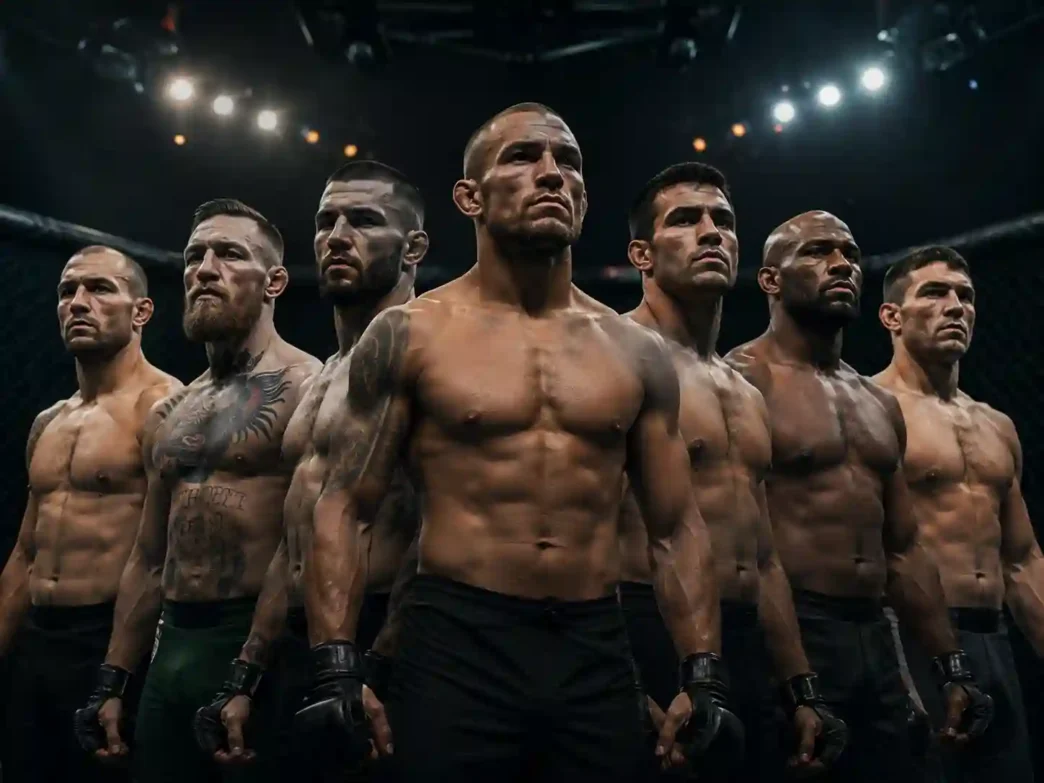
Mixed martial arts has gone from a fringe spectacle to one of the biggest combat sports on the planet and a small group of fighters deserves most of the credit for that transformation. They are the athletes who not only won championships, but redefined what was technically possible inside the Octagon, created the sport’s first true global superstars, and left behind records that current fighters are still chasing decades later.
UFC legends are fighters considered among the best ever in the promotion. This article will explore some of the most prominent UFC legends, why they were so special, and their lasting impact on the UFC today.
Anderson Silva
Anderson Silva’s time as UFC middleweight champion remains one of the most stylistically dazzling reigns in the sport’s history. Silva had a blend of elite striking precision and an almost theatrical unpredictability, often taunting opponents mid-fight before finishing them with a single, perfectly placed strike, en route to a championship run that saw him defend the belt 10 times in a row, and hold the longest title reign in UFC history at 2,457 days.
It wasn’t just the number of victories that set Silva apart from his contemporaries, but the way he dominated the truly elite of the sport, racking up multiple wins over former champions and top contenders like Chael Sonnen, Dan Henderson and Vitor Belfort. Today, his influence on striking in MMA is still seen in the way fighters close the distance and counter-strike.
Georges St-Pierre
Georges St-Pierre’s career has been all about being ready at all times, and tactical. He staked his legacy on a level of technical completeness that few fighters before him had ever shown, defending the UFC welterweight title nine times in a row. His ability to combine elite wrestling, jiu-jitsu and striking made him one of the first true “complete” fighters in the sport’s history, a template that every elite fighter since has tried to emulate.
Outside the cage, St-Pierre was one of the first genuine international crossover stars in the sport, helping to legitimize MMA to mainstream sports audiences as the sport was still fighting for broader cultural acceptance. His subsequent comeback to add the middleweight belt to his welterweight success only further cemented his reputation as one of the most well-rounded champions the sport has ever seen.
Jon Jones
Jones became the youngest champion in UFC history at age 23 when he won the light heavyweight title, and holds the most wins in title fights of any fighter in UFC history in two separate reigns as champion of the division. His size, creativity and propensity for unorthodox strikes, elbows, spinning attacks, oblique kicks made him almost impossible for opponents to game-plan against effectively.
Jones later moved up to the heavyweight division, where he would also win that title, adding to a legacy that already featured wins over an incredible list of former champions and top contenders. But while his life away from the Octagon was rife with real controversy, his in-Octagon resume still remains one of the most statistically dominant in the sport’s history, and his current heavyweight successor Tom Aspinall now carries that division’s torch into its next chapter.
Demetrious Johnson
Demetrious Johnson has the most consecutive title defenses in UFC history, having won 11 straight as flyweight champ — something no other fighter has done in any division. Johnson is widely regarded by many analysts and fighters alike as the most technically gifted mixed martial artist to ever step in the cage, and his combination of speed, cardio and technical precision across every phase of combat made him a truly one-of-a-kind talent, even if his lighter weight class sometimes limited his mainstream visibility compared to bigger-name champions.
Johnson’s reign was not without truly elite challengers, however, which is what separates true championship longevity from just dodging the tough fights. Years after his UFC flyweight career ended, his influence on how smaller-weight fighters are trained and viewed in the sport still echoes.
Khabib Nurmagomedov: Undefeated Perfection
Khabib Nurmagomedov retired with a perfect 29-0 record, which is very rarely seen at the top levels of the sport. He was a suffocating wrestler and grappler and once you got the fight to the ground it was almost impossible to get out of. His global star status was cemented with a signature victory over Conor McGregor in one of the biggest-selling fights in UFC history during his reign as the dominant lightweight champion.
The undefeated record was nice, but what made Khabib’s dominance so impressive was how much he dictated the pace and location of almost every fight he fought, deciding if a fight would be contested on the feet or the ground almost entirely on his terms. His undefeated retirement – a promise he made to his mother after his father’s passing – only added to a legacy already built on extraordinary skill and sincere personal conviction.
Ronda Rousey and Amanda Nunes
Ronda Rousey’s arrival in the UFC changed the course of women’s mixed martial arts. Her judo background led to her finishing a string of opponents via armbar in a collective time of under two minutes across multiple consecutive title defenses. She has mainstream crossover appeal, and that was part of what helped push the UFC to create a women’s division in the first place, opening the door for every female fighter who has competed for the promotion since.
Then Amanda Nunes built on that foundation to become what some still consider the greatest women’s fighter in UFC history, the first woman to hold two UFC belts simultaneously while defeating a list of legendary foes that included Rousey herself. Nunes’ combination of knockout power and elite grappling in two different weight classes set a new standard for what dominance in women’s MMA could look like, a standard that current champions like flyweight titleholder Valentina Shevchenko, the promotion’s longest-reigning active champion, continue to build on today.
Conor McGregor
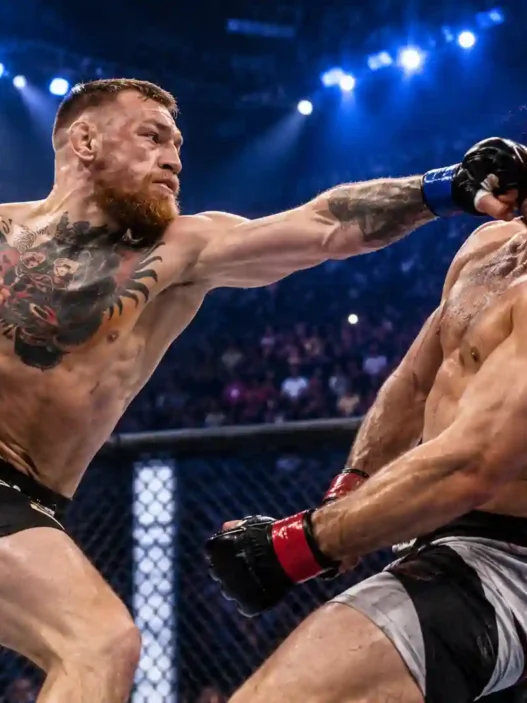
No fighter has done more to put mixed martial arts on the global mainstream map than Conor McGregor. His real knockout power, tactical southpaw precision and unique knack for self-promotion made him the first UFC fighter to become a true global superstar, becoming the first fighter in UFC history to simultaneously hold titles in two different weight classes.
McGregor’s crossover appeal took the sport way beyond its existing fanbase and his record-breaking pay-per-view figures showed that there was a commercial ceiling for MMA that few thought was possible. Whatever the arguments about his legacy inside the cage compared to purely dominant champions such as Jones or Johnson, his impact on the business side of the sport and the global visibility is arguably second to none.